Delhi overtakes Lahore as world's most polluted major city as air quality deteriorates
Why This Matters
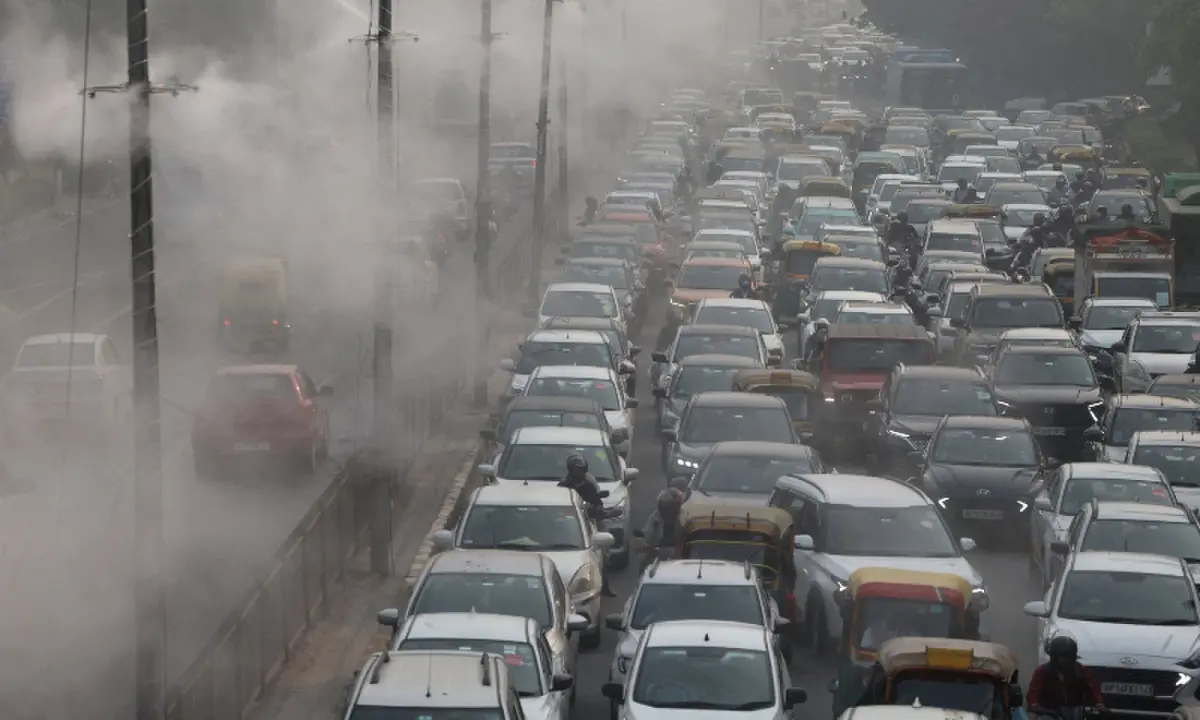
Key context: <p>India’s capital, Delhi, overtook Lahore to become the world’s most polluted city on Friday, with air quality reaching hazardous levels and visibility dropping as smog blanketed the city of 20 million people.</p> <p>Earlier, Delhi’s air quality index (AQI) stood at 334, categorised as “hazardous”, making it the most polluted major city globally, according to Swiss air quality monitoring group <a rel="noopener noreferrer" target="_blank" class="link--external" href="https://www.iqair.com/world-air-quality-ranking">IQAir</a>, which measures pollution levels based on the concentration of pollutants. An AQI reading of up to 50 is considered good, indicating little or no health risk.</p> <p>India’s official Central Pollution Control Board (CPCB), meanwhile, recorded a higher AQI of 403 in Delhi and classified the air quality as “severe”.</p> <p>The difference between the Swiss and Indian readings is due to the different AQI scales and methodologies used to calculate and classify air pollution levels.</p> <p>According to IQAir’s hourly readings, Delhi’s AQI had dropped to 208 by 11am PKT. At the time, Lahore was ranked seventh among the world’s most polluted major cities, with an AQI of 155.</p> <p>In Delhi, cars and motorcycles emerged from dense smog, which also appeared to obscure street lights on the city’s main roads, videos from news agency <em>ANI</em> showed.</p> <figure class='media w-full w-full media-- media--embed media--uneven media--tweet' data-original-src='https://x.com/ANI/status/2121096994185998722?a=LGgsZQqTfRv_iUaoGT8&s=20'> <div class='media__item media__item--twitter '><span> <blockquote class="twitter-tweet" lang="en"> <a href="https://twitter.com/ANI/status/2121096994185998722?a=LGgsZQqTfRv_iUaoGT8&s=20"></a> </blockquote> </span></div> </figure> <p>Pollution is a seasonal problem in many parts of northern Pakistan and India, as the cold, heavy air of winter traps vehicle emissions, construction dust and smoke from agricultural burning.</p> <p>Friday’s readings marked a drop in Lahore’s pollution levels after the city had ranked as the <a href="https://www.dawn.com/news/2043255">most polluted major city</a> in the world for several days in a row.</p> <p>Earlier this week, Lahore’s average PM2.5 concentration was <a href="https://www.dawn.com/news/2043509">eight times</a> the World Health Organisation’s (WHO) guideline value, according to a report by the Pakistan Air Quality Initiative (PAQI).</p> <p>The report, released on Tuesday, said the number of likely crop-residue fires in Punjab, Pakistan, remained almost unchanged from the corresponding period last year.</p> <p>Lahore’s average PM2.5 concentration stood at 126 micrograms per cubic metre during the period, exceeding the 24-hour National Environmental Quality Standards (NEQS) on all 40 days for which valid data were available. The average was 11pc lower than in the corresponding period in 2025.</p> <p>Satellite instruments detected 18,825 fires across Punjab, Pakistan, 89 per cent of which were classified as likely crop-residue burning. The highest daily count was recorded on Nov 1, with 1,102 detections.</p> <p>The 24-hour National Environmental Quality Standards (NEQS) were exceeded on all 40 days for which valid data were available. The average concentration was 11pc lower than during the corresponding period in 2025.</p> <p>However, the report cautioned that the association did not establish the precise contribution of crop-residue burning to urban pollution, as stagnant weather conditions and reduced atmospheric dispersion also contributed to the accumulation of pollutants.</p> This development from dawn.com highlights ongoing changes in the sector.
India’s capital, Delhi, overtook Lahore to become the world’s most polluted city on Friday, with air quality reaching hazardous levels and visibility dropping as smog blanketed the city of 20 million people. Earlier, Delhi’s air quality index (AQI) stood at 334, categorised as “hazardous”, making it the most polluted major city globally, according to Swiss air quality monitoring group IQAir, which measures pollution levels based on the concentration of pollutants. An AQI reading of up to 50 is considered good, indicating little or no health risk. India’s official Central Pollution Control Board (CPCB), meanwhile, recorded a higher AQI of 403 in Delhi and classified the air quality as “severe”. The difference between the Swiss and Indian readings is due to the different AQI scales and methodologies used to calculate and classify air pollution levels. According to IQAir’s hourly readings, Delhi’s AQI had dropped to 208 by 11am PKT. At the time, Lahore was ranked seventh among the world’s most polluted major cities, with an AQI of 155. In Delhi, cars and motorcycles emerged from dense smog, which also appeared to obscure street lights on the city’s main roads, videos from news agency ANI showed. Pollution is a seasonal problem in many parts of northern Pakistan and India, as the cold, heavy air of winter traps vehicle emissions, construction dust and smoke from agricultural burning. Friday’s readings marked a drop in Lahore’s pollution levels after the city had ranked as the most polluted major city in the world for several days in a row. Earlier this week, Lahore’s average PM2.5 concentration was eight times the World Health Organisation’s (WHO) guideline value, according to a report by the Pakistan Air Quality Initiative (PAQI). The report, released on Tuesday, said the number of likely crop-residue fires in Punjab, Pakistan, remained almost unchanged from the corresponding period last year. Lahore’s average PM2.5 concentration stood at 126 micrograms per cubic metre during the period, exceeding the 24-hour National Environmental Quality Standards (NEQS) on all 40 days for which valid data were available. The average was 11pc lower than in the corresponding period in 2025. Satellite instruments detected 18,825 fires across Punjab, Pakistan, 89 per cent of which were classified as likely crop-residue burning. The highest daily count was recorded on Nov 1, with 1,102 detections. The 24-hour National Environmental Quality Standards (NEQS) were exceeded on all 40 days for which valid data were available. The average concentration was 11pc lower than during the corresponding period in 2025. However, the report cautioned that the association did not establish the precise contribution of crop-residue burning to urban pollution, as stagnant weather conditions and reduced atmospheric dispersion also contributed to the accumulation of pollutants.
Curation & Context
This page summarizes a public news report from dawn.com. Global News Hub provides the "Why This Matters" takeaway using editorial insights and AI curation to give readers rapid, high-value context before they click through to read the full article.