Reacting to Bilawal's remarks on 'brute majority', a section of legal community wants 26th, 27th Amendments repealed
Why This Matters
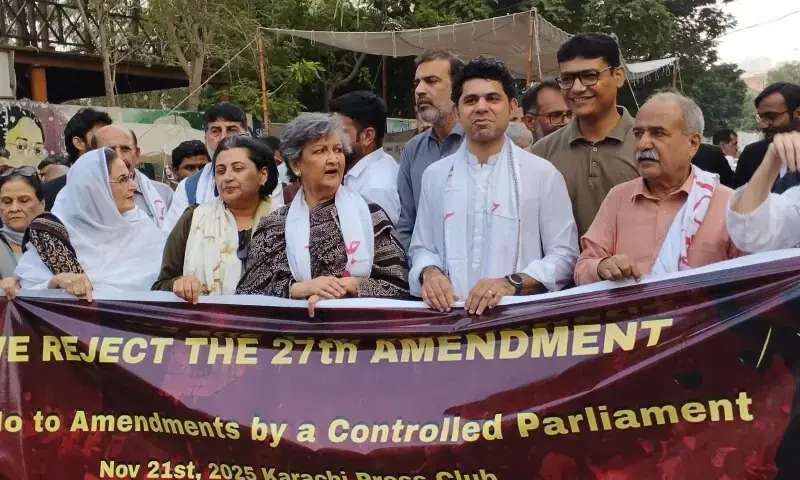
Key context: <p>A hundred members of the legal fraternity and civil society have called for the 26th and 27th Constitutional Amendments to be repealed, reacting to remarks by PPP Chairman Bilawal Bhutto-Zardari, whose party had made their enactment possible.</p> <p>The 26th and 27th Amendments, enacted in <a href="https://www.dawn.com/news/1866452">October 2024</a> and <a href="https://www.dawn.com/news/1954815">November 2025</a> respectively, were passed by both <a href="https://www.dawn.com/news/1954651/na-passes-27th-amendment-bill-in-chaotic-session-attended-by-political-bigwigs">houses</a> of the Parliament amid <a href="https://www.dawn.com/news/1954237/27th-constitutional-amendment-bill-sails-through-senate-pti-senator-resigns-after-voting-in-favour">outcry</a> from the PTI-led opposition.</p> <p>Last week, Bilawal — a strong <a href="https://www.dawn.com/news/1958337#:~:text=%E2%80%98FCC%20will%20prove%20wrong%20those%20trying%20to%20make%20it%20controversial%E2%80%99"><u>advocate</u></a> for both Amendments when they were passed — <a href="https://www.dawn.com/news/2045176#:~:text=%E2%80%9827th%20Amendment%20passed%20with%20brute%20majority%E2%80%99">said</a> the 27th Amendment was “passed neither through political consensus nor mutual agreement; it was passed with brute majority”, and that the previous one did have mutual agreement.</p> <p>He also questioned the current status of the judiciary, particularly in the wake of the 27th Amendment, noting that <a href="https://www.dawn.com/news/1955240">resignations</a> of senior judges followed the legislation.</p> <p>Later, the PPP chairman <a href="https://www.dawn.com/news/2045449#:~:text=%E2%80%98Not%20disowning%2027th%20Amendment%E2%80%99">clarified</a> that he was “not disowning” the 27th Amendment, but rather noting that it did not enjoy the same “unanimous consensus” as the 18th Amendment and the 1973 Constitution.</p> <p>In an open letter on Tuesday, 100 individuals — mostly lawyers and also including activists and academics — called for both the 26th and 27th Amendments to be repealed.</p> <p>“Pakistan’s constitutional order belongs to its people. It cannot be seized by a majority that its own members admit was never theirs to wield,” read the letter, also signed by retired Supreme Court Justice Mansoor Ali Shah.</p> <p>The letter recalled that Bilawal “admitted that the 27th Amendment was passed neither through political consensus nor through agreement, but a ‘brute majority’”.</p> <p>It demanded that the “constitutional order that existed prior to the 26th Amendment must be restored”, adding that any future reform of the judiciary must come through an “open and consultative process”.</p> <p>The <a href="https://www.dawn.com/news/1866452"><u>26th Amendment</u></a> carved a constitutional bench out of the SC, with its members chosen by a reconstituted Judicial Commission of Pakistan (JCP) in which judges no longer held a majority.</p> <figure class='media w-full w-full media-- media--embed media--uneven' data-original-src='https://www.dawn.com/news/1998807'> <div class='media__item media__item--newskitlink '> <iframe class="nk-iframe" width="100%" frameborder="0" scrolling="no" style="height:250px;position:relative" src="https://www.dawn.com/news/card/1998807" sandbox="allow-same-origin allow-scripts allow-popups allow-modals allow-forms"></iframe></div> </figure> <p>A year later, the <a href="https://www.dawn.com/news/1955038"><u>27th Amendment</u></a> turned those benches into an entirely separate court, the Federal Constitutional Court (FCC), which is said to have effectively <a href="https://www.dawn.com/news/1954002/27th-amendment-dethrones-supreme-court-legal-experts-warn">dethroned the SC</a> as the country’s highest judicial forum.</p> <p>It also made significant changes to the judicial system and the <a href="https://www.dawn.com/news/1953888">military’s chain of command</a>, and granted immunities to government officials. Two of the SC’s senior-most judges, including Shah, <a href="https://www.dawn.com/news/1954872"><u>resigned</u></a> in protest the day it became law.</p> <p>Tuesday’s letter also called for reserved seats in the legislative houses to be returned to their “lawful claimants”, in an apparent reference to the opposition.</p> <figure class='media w-full sm:w-1/2 media--right media--embed media--uneven' data-original-src='https://www.dawn.com/news/1921060/how-the-sc-constitutional-bench-handed-two-thirds-majority-to-an-unelected-unity-regime'> <div class='media__item media__item--newskitlink '> <iframe class="nk-iframe" width="100%" frameborder="0" scrolling="no" style="height:250px;position:relative" src="https://www.dawn.com/news/card/1921060" sandbox="allow-same-origin allow-scripts allow-popups allow-modals allow-forms"></iframe></div> </figure> <p>The PTI was deprived of its <a href="https://www.dawn.com/news/1845359#:~:text=The%20reserved%20seats%20issue"><u>reserved seats</u></a> in the 2024 elections following the <a href="https://www.dawn.com/news/1805488">revocation</a> of its electoral symbol.</p> <p>Although an SC bench <a href="https://www.dawn.com/news/1845531/sc-gives-pti-its-groove-back"><u>declared the PTI eligible</u></a> for the seats, the order was <a href="https://www.dawn.com/news/1859825">not implemented</a> and later <a href="https://www.dawn.com/news/1920543">overturned</a> by the constitutional bench created via the 26th Amendment, which <a href="https://www.dawn.com/news/1921759">handed them</a> to the coalition parties that challenged the 2024 ruling.</p> <p>“The government cannot continue exercising parliamentary authority derived from a process that the governing coalition’s own leadership has now publicly called into question,” Tuesday’s letter read.</p> <p>“These seats must be restored to their rightful claimants through the appropriate legal and constitutional mechanism,” it added.</p> <p>The letter noted that Bilawal “described the way the opposition was stripped of its reserved seats as ‘a joke’ and said the treasury benches had simply put those seats ‘in their pockets’”.</p> <p>“Most damning of all, he accused the ruling government of amending the Constitution using seats that are ‘not yours’,” the document added.</p> <p>The signatories pointed out that these words came “from the government’s key coalition partner whose votes were required to pass both the 26th and 27th Amendments”.</p> <p>It continued: “The treasury benches face a question they can no longer evade. Their own coalition partner says reserved seats were taken by parties that had no right to them.</p> <p>“On what constitutional, legal or moral basis does the government then keep claiming the numbers through which the 26th and 27th Amendments were passed?”</p> <p>The lawyers and activists noted that a two-thirds majority was the safeguard the Constitution demands so that “it cannot be changed without the genuine and lawful representation of the people’s will”.</p> <p>However, a majority “made up with seats that were unjustly denied to the opposition is not the majority the Constitution demands”, they contended.</p> <p>“An amendment passed on that basis holds no constitutional, legal, or democratic validity. An amendment passed without a legitimate two-thirds majority is void from its very inception,” the letter asserted.</p> <p>It further said that these questions applied directly to the FCC, which “owes its existence wholly to the 27th Amendment”.</p> <p>“Its jurisdiction, its composition and its authority all come from a constitutional change whose legitimacy is now openly repudiated by the very people who brought it into being.</p> <p>“A court cannot rise higher than its source. An institution whose authors cannot defend how it was built has no foundation left to stand on,” the lawyer said.</p> <p>“Pakistan has witnessed far too many admissions of wrongdoing that have led to no consequences,” the letter observed, noting that leaders acknowledge violations at press conferences, express reservations, and then “allow the very arrangements they condemn to continue unchanged”.</p> <p>“This cycle must end. The question is no longer simply whether a wrong was committed, but whether consequences and meaningful action will follow.”</p> <p>The signatories stressed this was a “moment to begin repairing the grave damage caused to the judiciary and the constitutional order”.</p> <p>“Those in power have a choice. They can either continue to cling to an illegitimate majority or they can correct course.”</p> This development from dawn.com highlights ongoing changes in the sector.
A hundred members of the legal fraternity and civil society have called for the 26th and 27th Constitutional Amendments to be repealed, reacting to remarks by PPP Chairman Bilawal Bhutto-Zardari, whose party had made their enactment possible. The 26th and 27th Amendments, enacted in October 2024 and November 2025 respectively, were passed by both houses of the Parliament amid outcry from the PTI-led opposition. Last week, Bilawal — a strong advocate for both Amendments when they were passed — said the 27th Amendment was “passed neither through political consensus nor mutual agreement; it was passed with brute majority”, and that the previous one did have mutual agreement. He also questioned the current status of the judiciary, particularly in the wake of the 27th Amendment, noting that resignations of senior judges followed the legislation. Later, the PPP chairman clarified that he was “not disowning” the 27th Amendment, but rather noting that it did not enjoy the same “unanimous consensus” as the 18th Amendment and the 1973 Constitution. In an open letter on Tuesday, 100 individuals — mostly lawyers and also including activists and academics — called for both the 26th and 27th Amendments to be repealed. “Pakistan’s constitutional order belongs to its people. It cannot be seized by a majority that its own members admit was never theirs to wield,” read the letter, also signed by retired Supreme Court Justice Mansoor Ali Shah. The letter recalled that Bilawal “admitted that the 27th Amendment was passed neither through political consensus nor through agreement, but a ‘brute majority’”. It demanded that the “constitutional order that existed prior to the 26th Amendment must be restored”, adding that any future reform of the judiciary must come through an “open and consultative process”. The 26th Amendment carved a constitutional bench out of the SC, with its members chosen by a reconstituted Judicial Commission of Pakistan (JCP) in which judges no longer held a majority. A year later, the 27th Amendment turned those benches into an entirely separate court, the Federal Constitutional Court (FCC), which is said to have effectively dethroned the SC as the country’s highest judicial forum. It also made significant changes to the judicial system and the military’s chain of command, and granted immunities to government officials. Two of the SC’s senior-most judges, including Shah, resigned in protest the day it became law. Tuesday’s letter also called for reserved seats in the legislative houses to be returned to their “lawful claimants”, in an apparent reference to the opposition. The PTI was deprived of its reserved seats in the 2024 elections following the revocation of its electoral symbol. Although an SC bench declared the PTI eligible for the seats, the order was not implemented and later overturned by the constitutional bench created via the 26th Amendment, which handed them to the coalition parties that challenged the 2024 ruling. “The government cannot continue exercising parliamentary authority derived from a process that the governing coalition’s own leadership has now publicly called into question,” Tuesday’s letter read. “These seats must be restored to their rightful claimants through the appropriate legal and constitutional mechanism,” it added. The letter noted that Bilawal “described the way the opposition was stripped of its reserved seats as ‘a joke’ and said the treasury benches had simply put those seats ‘in their pockets’”. “Most damning of all, he accused the ruling government of amending the Constitution using seats that are ‘not yours’,” the document added. The signatories pointed out that these words came “from the government’s key coalition partner whose votes were required to pass both the 26th and 27th Amendments”. It continued: “The treasury benches face a question they can no longer evade. Their own coalition partner says reserved seats were taken by parties that had no right to them. “On what constitutional, legal or moral basis does the government then keep claiming the numbers through which the 26th and 27th Amendments were passed?” The lawyers and activists noted that a two-thirds majority was the safeguard the Constitution demands so that “it cannot be changed without the genuine and lawful representation of the people’s will”. However, a majority “made up with seats that were unjustly denied to the opposition is not the majority the Constitution demands”, they contended. “An amendment passed on that basis holds no constitutional, legal, or democratic validity. An amendment passed without a legitimate two-thirds majority is void from its very inception,” the letter asserted. It further said that these questions applied directly to the FCC, which “owes its existence wholly to the 27th Amendment”. “Its jurisdiction, its composition and its authority all come from a constitutional change whose legitimacy is now openly repudiated by the very people who brought it into being. “A court cannot rise higher than its source. An institution whose authors cannot defend how it was built has no foundation left to stand on,” the lawyer said. “Pakistan has witnessed far too many admissions of wrongdoing that have led to no consequences,” the letter observed, noting that leaders acknowledge violations at press conferences, express reservations, and then “allow the very arrangements they condemn to continue unchanged”. “This cycle must end. The question is no longer simply whether a wrong was committed, but whether consequences and meaningful action will follow.” The signatories stressed this was a “moment to begin repairing the grave damage caused to the judiciary and the constitutional order”. “Those in power have a choice. They can either continue to cling to an illegitimate majority or they can correct course.”
Curation & Context
This page summarizes a public news report from dawn.com. Global News Hub provides the "Why This Matters" takeaway using editorial insights and AI curation to give readers rapid, high-value context before they click through to read the full article.