France to deploy 70,000 police for fresh weekend protests
Why This Matters
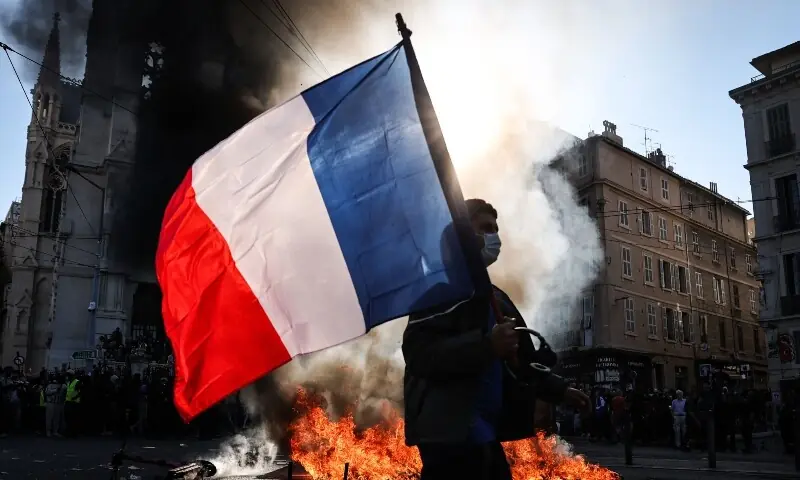
Key context: <p>France will deploy about 70,000 police nationwide as it braces for new protests on Saturday after some of the worst urban violence in years erupted on the sidelines of demonstrations a week ago.</p> <p>Protests by high school students over learning conditions sparked a movement that has since spread nationwide, fuelled by broader anger over the rising cost of living.</p> <p>About 70,000 security personnel will be deployed on Saturday, Interior Minister Laurent Nunez said at a news conference in Paris, warning that calls for violence and looting were circulating on social media.</p> <p>The protests have come at a critical moment for France six months ahead of elections to replace President Emmanuel Macron, with a new poll underlining far-right candidate Marine Le Pen as the frontrunner and indicating her position has been strengthened by the latest events.</p> <p>Adding to tensions, Le Pen is due at the weekend to host her National Rally (RN) party congress in Orleans, with thousands of supporters expected and local authorities fearing clashes as counter-protesters also head to the city south of Paris.</p> <p>Macron met representatives of secondary school pupils on Friday, but they emerged from the talks urging students to keep protesting until the government put forward concrete proposals to address their demands.</p> <h2><a id="offenders-jailed" href="#offenders-jailed" class="heading-permalink" aria-hidden="true" tabindex="-1" title="Permalink"></a>Offenders jailed</h2> <p>Macron’s government has sought to draw a line between the legitimate demands of protesters and the looting, burning and ransacking that erupted on the sidelines of demonstrations last Saturday.</p> <p>Courts have already sent 217 people, half of them first-time offenders, to prison over the events on Saturday, Justice Minister Gerald Darmanin said.</p> <p>On Thursday, Macron called for “the utmost severity” against “acts of delinquency”, accusing “ultra-left” groups of having sought to “bring down the republic” last weekend.</p> <p>An extreme-left group in western France posted on its website a call for its supporters to be “uncatchable, unpredictable, to evade the deployment” of police.</p> <h2><a id="protest-restrictions" href="#protest-restrictions" class="heading-permalink" aria-hidden="true" tabindex="-1" title="Permalink"></a>Protest restrictions</h2> <p>Authorities have stepped up security measures and imposed restrictions on protests.</p> <p>In Orleans, between 20,000 and 30,000 people are expected to come out against Le Pen’s National Rally party, but the gathering will be barred from the city centre, the prefecture said.</p> <p>In the southeastern city of Lyon, central areas will also be off-limits to demonstrators this weekend.</p> <p>In Paris, police overturned a previous permit for union-led protesters to march between Bastille and Nation squares in the east.</p> <p>The force said the parade could instead go in the afternoon along an alternative route on the southeastern edge of the city.</p> <p>Unions vowed to push ahead on the banned route, citing safety concerns over the alternative.</p> <p>Authorities in Marseille had also banned protests but announced Friday that a union-organised demonstration would be allowed on an “exceptional basis” – the only one authorised in the southern Bouches-du-Rhone department.</p> <p>In the capital, leading museums including the Louvre will be closed on Saturday while the Art Basel art fair is being cut short.</p> <h2><a id="police-responsibility" href="#police-responsibility" class="heading-permalink" aria-hidden="true" tabindex="-1" title="Permalink"></a>Police ‘responsibility’</h2> <p>The restrictions, including outright bans on protests in some cities, have drawn criticism.</p> <p>Amnesty International denounced what it called “a slide toward authoritarian practice”, saying the measures were “jeopardising the right to demonstrate peacefully”.</p> <p>About 20 percent more members of the security forces will be deployed this weekend following questions over police preparedness and intelligence gathering ahead of last week’s violence.</p> <p>“Police have a responsibility both to ensure that protests can take place peacefully and safely and to protect the public from violent disorder,” said Eva Cosse, senior Europe researcher at Human Rights Watch.</p> <p>She voiced alarm over reports of children being severely injured by crowd-control weapons during recent gatherings.</p> <p>The violence has tarnished the image of France ahead of elections that could be a turning point in its modern history, with the government’s debt pile also troubling investors.</p> <p>A new poll by Harris Interactive for M6/RTL made after the violence showed Le Pen soaring ahead on 33-35 percent in the first round of voting for the presidential elections.</p> <p>It predicted that hard-left leader Jean-Luc Melenchon was on course to face her in the run-off where Le Pen would emerge as an easy winner on about 70 percent of the vote.</p> This development from dawn.com highlights ongoing changes in the sector.
France will deploy about 70,000 police nationwide as it braces for new protests on Saturday after some of the worst urban violence in years erupted on the sidelines of demonstrations a week ago. Protests by high school students over learning conditions sparked a movement that has since spread nationwide, fuelled by broader anger over the rising cost of living. About 70,000 security personnel will be deployed on Saturday, Interior Minister Laurent Nunez said at a news conference in Paris, warning that calls for violence and looting were circulating on social media. The protests have come at a critical moment for France six months ahead of elections to replace President Emmanuel Macron, with a new poll underlining far-right candidate Marine Le Pen as the frontrunner and indicating her position has been strengthened by the latest events. Adding to tensions, Le Pen is due at the weekend to host her National Rally (RN) party congress in Orleans, with thousands of supporters expected and local authorities fearing clashes as counter-protesters also head to the city south of Paris. Macron met representatives of secondary school pupils on Friday, but they emerged from the talks urging students to keep protesting until the government put forward concrete proposals to address their demands. Offenders jailed Macron’s government has sought to draw a line between the legitimate demands of protesters and the looting, burning and ransacking that erupted on the sidelines of demonstrations last Saturday. Courts have already sent 217 people, half of them first-time offenders, to prison over the events on Saturday, Justice Minister Gerald Darmanin said. On Thursday, Macron called for “the utmost severity” against “acts of delinquency”, accusing “ultra-left” groups of having sought to “bring down the republic” last weekend. An extreme-left group in western France posted on its website a call for its supporters to be “uncatchable, unpredictable, to evade the deployment” of police. Protest restrictions Authorities have stepped up security measures and imposed restrictions on protests. In Orleans, between 20,000 and 30,000 people are expected to come out against Le Pen’s National Rally party, but the gathering will be barred from the city centre, the prefecture said. In the southeastern city of Lyon, central areas will also be off-limits to demonstrators this weekend. In Paris, police overturned a previous permit for union-led protesters to march between Bastille and Nation squares in the east. The force said the parade could instead go in the afternoon along an alternative route on the southeastern edge of the city. Unions vowed to push ahead on the banned route, citing safety concerns over the alternative. Authorities in Marseille had also banned protests but announced Friday that a union-organised demonstration would be allowed on an “exceptional basis” – the only one authorised in the southern Bouches-du-Rhone department. In the capital, leading museums including the Louvre will be closed on Saturday while the Art Basel art fair is being cut short. Police ‘responsibility’ The restrictions, including outright bans on protests in some cities, have drawn criticism. Amnesty International denounced what it called “a slide toward authoritarian practice”, saying the measures were “jeopardising the right to demonstrate peacefully”. About 20 percent more members of the security forces will be deployed this weekend following questions over police preparedness and intelligence gathering ahead of last week’s violence. “Police have a responsibility both to ensure that protests can take place peacefully and safely and to protect the public from violent disorder,” said Eva Cosse, senior Europe researcher at Human Rights Watch. She voiced alarm over reports of children being severely injured by crowd-control weapons during recent gatherings. The violence has tarnished the image of France ahead of elections that could be a turning point in its modern history, with the government’s debt pile also troubling investors. A new poll by Harris Interactive for M6/RTL made after the violence showed Le Pen soaring ahead on 33-35 percent in the first round of voting for the presidential elections. It predicted that hard-left leader Jean-Luc Melenchon was on course to face her in the run-off where Le Pen would emerge as an easy winner on about 70 percent of the vote.
Curation & Context
This page summarizes a public news report from dawn.com. Global News Hub provides the "Why This Matters" takeaway using editorial insights and AI curation to give readers rapid, high-value context before they click through to read the full article.