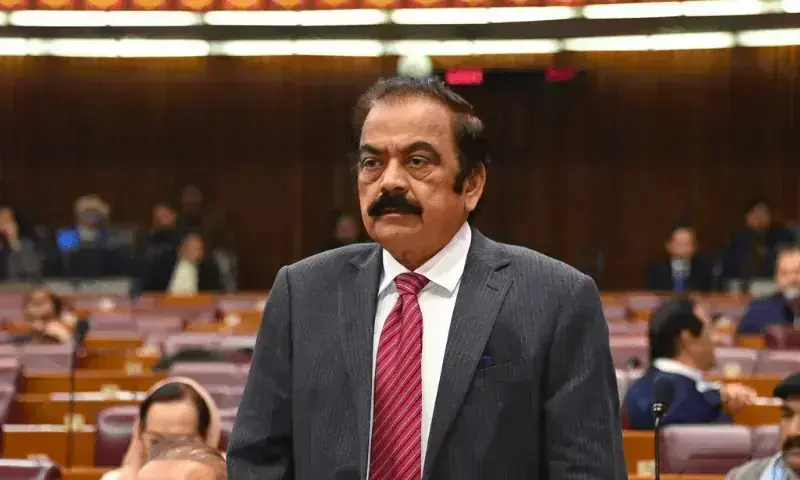
Rana Sana urges consensus on new provinces referendum, says 'disputed' exercise will not benefit country
Why This Matters
Key context: <p>Adviser to the Prime Minister on Political Affairs Rana Sanaullah on Sunday said that the decision to hold a referendum on new provinces should be based on consensus, warning that a “disputed” exercise would not be beneficial.</p> <p>The remarks come amid a debate over the proposed creation of new provinces, with Parliamentary Affairs Minister Tariq Fazal Chaudhry <a href="https://www.dawn.com/news/2045936"><u>insisting</u></a> last week that a referendum on the matter “will happen”.</p> <p>Defence Minister Khawaja Asif said earlier this week that discussions on a possible <a href="https://www.dawn.com/news/2045936"><u>referendum</u></a> were expected to take a “definitive shape” by the end of this year, with the process likely to move forward early next year.</p> <p>Speaking to the media in Faisalabad, Sanaullah defended holding a referendum to decide on creating fresh administrative units.</p> <p>“There is no harm in taking guidance from the people [..] nothing could be better; however, if the referendum is disputed, its results will not benefit the country, and that is why the decision for referendum should be based on consensus,” he told reporters.</p> <p>On being asked about his opinion on PPP Chairman Bilawal Bhutto-Zardari’s stance on the issue, Sanaullah noted that Bilawal was in favour of South Punjab province, but opposed the creation of provinces in Sindh.</p> <p>“I think all these, whether it is the issue of South Punjab or the division of Sindh, the place to decide on these matters is Parliament. It should be discussed in Parliament, and the committee system in Parliament should be utilised,” he said, adding that the lawmakers should sit and deliberate upon the issue and then proceed with consensus.</p> <p>He observed that actions taken with consensus in the political arena previously proved to be “long-lasting” and beneficial to the nation.</p> <p>The PM’s aide called for consensus on the creation of administrative units.</p> <p>“All political parties should present their point of view, come to the forefront [so that] a common point could be found,” he said.</p> <p>On tensions between JUI-F chief Maulana Fazlur Rehman and the federal government, Sanaullah said he did not wish to present any “commentary” on the issue, insisting everyone should be on the same page in the fight against terrorism.</p> <p>“Maulana is a very senior politician […] but the thing he said about martyrs, I believe, was not appropriate, but ever since then things have gotten out of hand; however, efforts are being made, and I believe that instead of politicising the issue, we should focus on the fight against terrorism […] it should be a red line for the nation to speak about martyrs,” he said.</p> <p>“I hope that we will be able to create a better situation collectively,” he added.</p> <p>Sanaullah was also asked about Bilawal calling the incarcerated prime minister Imran Khan “a political prisoner”. To this, the PM’s aide said that the PPP chairman had the right to hold his own point of view.</p> <p>“I have no right to stop him from having or giving his point of view, but in my view, if a person is punished through a court in a case after trial, then he cannot be called a political prisoner,” he maintained.</p> <p>Separately, the parliamentary affairs minister also stressed the need for consensus on a referendum for creating new provinces.</p> <p>Virtually joining <em>Geo News</em> programme ‘<em>Naya Pakistan</em>’, he said it was possible that the prospect of a referendum and framing the question for it would come under discussion in the National Assembly session called for Dec 1.</p> <p>Over the past few months, Interior Minister Mohsin Naqvi has whipped up a <a href="https://www.dawn.com/news/2019825"><u>political storm</u></a> since he called for the formation of <a href="https://www.dawn.com/news/2019599"><u>new administrative units</u></a> in the country, saying the current “system” of governance had “collapsed” and needed a “reset”.</p> <p>On November 12, Naqvi also <a href="https://www.dawn.com/news/2044196"><u>floated the idea</u></a> of holding a referendum to gauge public opinion on the issue, saying the exercise could settle the contentious debate once and for all.</p> <p>However, PPP’s Bilawal, in a <a href="https://www.dawn.com/news/2045176">hard-hitting speech</a> on November 17, termed the referendum an “unconstitutional move”, vowing that his party would stand against any such measure. He also cautioned that any “forced” attempt to divide provinces, particularly in Sindh, could lead to bloodshed.</p> <p>The federal government, meanwhile, <a href="https://www.dawn.com/news/2045201/?utm_source=newskit_ai"><u>maintains</u></a> that a referendum is a legal and constitutional method of gauging public opinion on new provinces and that no political party should have reservations regarding it.</p> This development from dawn.com highlights ongoing changes in the sector.
Adviser to the Prime Minister on Political Affairs Rana Sanaullah on Sunday said that the decision to hold a referendum on new provinces should be based on consensus, warning that a “disputed” exercise would not be beneficial. The remarks come amid a debate over the proposed creation of new provinces, with Parliamentary Affairs Minister Tariq Fazal Chaudhry insisting last week that a referendum on the matter “will happen”. Defence Minister Khawaja Asif said earlier this week that discussions on a possible referendum were expected to take a “definitive shape” by the end of this year, with the process likely to move forward early next year. Speaking to the media in Faisalabad, Sanaullah defended holding a referendum to decide on creating fresh administrative units. “There is no harm in taking guidance from the people [..] nothing could be better; however, if the referendum is disputed, its results will not benefit the country, and that is why the decision for referendum should be based on consensus,” he told reporters. On being asked about his opinion on PPP Chairman Bilawal Bhutto-Zardari’s stance on the issue, Sanaullah noted that Bilawal was in favour of South Punjab province, but opposed the creation of provinces in Sindh. “I think all these, whether it is the issue of South Punjab or the division of Sindh, the place to decide on these matters is Parliament. It should be discussed in Parliament, and the committee system in Parliament should be utilised,” he said, adding that the lawmakers should sit and deliberate upon the issue and then proceed with consensus. He observed that actions taken with consensus in the political arena previously proved to be “long-lasting” and beneficial to the nation. The PM’s aide called for consensus on the creation of administrative units. “All political parties should present their point of view, come to the forefront [so that] a common point could be found,” he said. On tensions between JUI-F chief Maulana Fazlur Rehman and the federal government, Sanaullah said he did not wish to present any “commentary” on the issue, insisting everyone should be on the same page in the fight against terrorism. “Maulana is a very senior politician […] but the thing he said about martyrs, I believe, was not appropriate, but ever since then things have gotten out of hand; however, efforts are being made, and I believe that instead of politicising the issue, we should focus on the fight against terrorism […] it should be a red line for the nation to speak about martyrs,” he said. “I hope that we will be able to create a better situation collectively,” he added. Sanaullah was also asked about Bilawal calling the incarcerated prime minister Imran Khan “a political prisoner”. To this, the PM’s aide said that the PPP chairman had the right to hold his own point of view. “I have no right to stop him from having or giving his point of view, but in my view, if a person is punished through a court in a case after trial, then he cannot be called a political prisoner,” he maintained. Separately, the parliamentary affairs minister also stressed the need for consensus on a referendum for creating new provinces. Virtually joining Geo News programme ‘Naya Pakistan’, he said it was possible that the prospect of a referendum and framing the question for it would come under discussion in the National Assembly session called for Dec 1. Over the past few months, Interior Minister Mohsin Naqvi has whipped up a political storm since he called for the formation of new administrative units in the country, saying the current “system” of governance had “collapsed” and needed a “reset”. On November 12, Naqvi also floated the idea of holding a referendum to gauge public opinion on the issue, saying the exercise could settle the contentious debate once and for all. However, PPP’s Bilawal, in a hard-hitting speech on November 17, termed the referendum an “unconstitutional move”, vowing that his party would stand against any such measure. He also cautioned that any “forced” attempt to divide provinces, particularly in Sindh, could lead to bloodshed. The federal government, meanwhile, maintains that a referendum is a legal and constitutional method of gauging public opinion on new provinces and that no political party should have reservations regarding it.
Curation & Context
This page summarizes a public news report from dawn.com. Global News Hub provides the "Why This Matters" takeaway using editorial insights and AI curation to give readers rapid, high-value context before they click through to read the full article.