Independent media not as 'independent' as it could be: Mehdi Hasan
Why This Matters
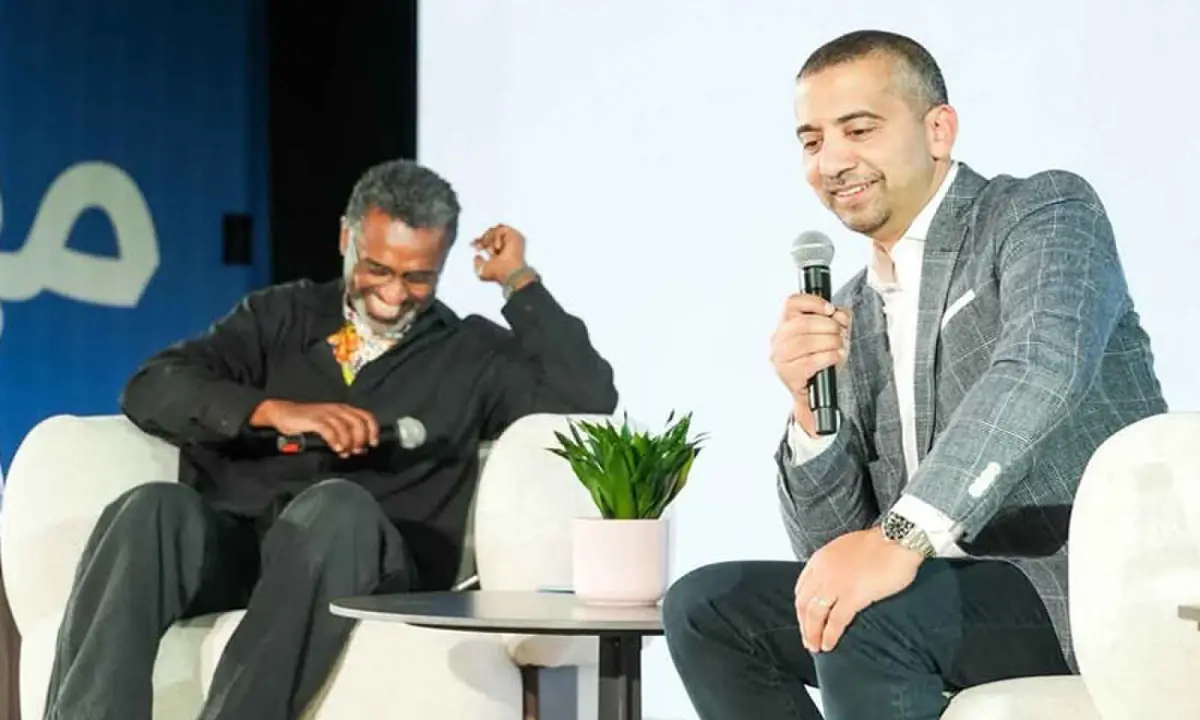
Key context: <p>• US journalist says news gatekeeping has been outsourced to Silicon Valley<br>• Says every journalist ‘needs to be’ a content creator now</p> <p>DOHA: Journalism has undergone a major transformation since the advent of social media and independent news platforms, bringing both opportunities and challenges. These changes were the focus of a talk titled <em>The New Gatekeepers</em> by British-American journalist Mehdi Hasan at the Doha Film Festival.</p> <p>Drawing on his experience at mainstream outlets including the <em>BBC</em>, <em>CNN</em>, <em>Al Jazeera</em>, <em>Sky News</em> and <em>MSNBC</em>, Hasan discussed the changing media landscape and his move towards independent journalism through his own media company, <em>Zeteo</em>, after his <em>MSNBC</em> show was cancelled.</p> <p>Speaking about news gatekeepers, he said that historically only a handful of people could communicate with mass audiences because billionaires, corporations and governments controlled the technology and resources needed to spread information. That has now changed.</p> <p>“It’s good that we have democratised access to the news. Today anyone in this room can go out with a microphone, camera and a WiFi connection and potentially reach more people than a <em>BBC</em>, <em>CNN</em> or an <em>Al Jazeera</em> journalist,” he said.</p> <p>However, Mr Hasan stressed he was not opposed to gatekeeping itself, arguing that journalism still needed fact-checking and professional standards. “I am still a journalist, not a YouTuber or content creator. I am still on YouTube, but I do fact-check. The problem with the old gatekeepers was not the gates. It was that they were opening the gates to the powerful and shutting them to the powerless.”</p> <p>Citing a <em>Reuters Institute</em> survey, he noted that, for the first time, more people were getting their news from social media than from news websites and apps. “We are already in a brave new world,” he remarked.</p> <p>But the democratisation of information had not eliminated gatekeeping; instead, it had transferred much of that power to Silicon Valley, where technology executives such as Elon Musk and Mark Zuckerberg exercise considerable influence.</p> <p>Hasan described it as “insane” that platforms controlled by Zuckerberg, including WhatsApp, Instagram, Facebook and Threads, were used by a substantial proportion of the world’s population, with many relying on them for news.</p> <p>He warned that algorithms could undermine the news business, as had already happened to numerous publishers.</p> <p>Asked whether independent media was truly independent, Hasan acknowledged that it was not as independent as it could be. Although such outlets were often free from corporate, government or billionaire ownership and relied on subscribers rather than advertising, they faced another pressure: “audience capture”.</p> <p>“If you are fully funded by your subscribers, then you would tell them what they want to hear,” he said.</p> <p>He cited his own experience at <em>Zeteo</em>, where subscribers cancelled their subscriptions during the 2024 US election for diametrically opposed reasons, illustrating the difficulties of maintaining an independent editorial space.</p> <p>On whether every journalist now had to become a content creator, Mr Hasan said the two roles had increasingly overlapped. “I think every journalist does have to be a content creator now, which is a double-edged sword. But I don’t think every content creator or YouTuber is a journalist.”</p> <p>Addressing the crisis of trust in information, he argued that journalism itself was not responsible for the decline in public confidence. “I don’t think journalism is inherently bad, evil or has lost trust. I think institutions, people and journalistic practices have lost trust. People are craving journalism, facts, evidence, information and news about the world,” he said.</p> <p>Mr Hasan also rejected the idea that corporate media was dead, arguing that established organisations remained essential because independent outlets lacked the resources and expertise for large-scale news gathering, foreign coverage and extensive investigative reporting.</p> <p>He said he could not undertake the kind of investigative journalism produced by <em>The New York Times</em> due to lack of resources. However, he said, mainstream media had failed audiences in several areas, creating demand for alternative sources of information.</p> <h2><a id="agenda-objectivity" href="#agenda-objectivity" class="heading-permalink" aria-hidden="true" tabindex="-1" title="Permalink"></a>Agenda, objectivity</h2> <p>On editorial agendas and objectivity, Mr Hasan admitted that he had his own agenda, arguing that no media organisation was entirely neutral. “I don’t believe that there is any neutral media outlet, but my position is that journalists are allowed to have opinions as long as they are based on facts. I believe in objectivity. Neutrality and objectivity are not the same. I don’t believe you should be neutral between good and evil.”</p> <p>He identified another major challenge for independent journalism: audiences’ reluctance to pay for news. Without subscriptions or paywalls, he argued, it was difficult to fund the reporting and information gathering needed to sustain quality journalism.</p> <p><em>Published in Dawn, November 23rd, 2026</em></p> This development from dawn.com highlights ongoing changes in the sector.
• US journalist says news gatekeeping has been outsourced to Silicon Valley• Says every journalist ‘needs to be’ a content creator now DOHA: Journalism has undergone a major transformation since the advent of social media and independent news platforms, bringing both opportunities and challenges. These changes were the focus of a talk titled The New Gatekeepers by British-American journalist Mehdi Hasan at the Doha Film Festival. Drawing on his experience at mainstream outlets including the BBC, CNN, Al Jazeera, Sky News and MSNBC, Hasan discussed the changing media landscape and his move towards independent journalism through his own media company, Zeteo, after his MSNBC show was cancelled. Speaking about news gatekeepers, he said that historically only a handful of people could communicate with mass audiences because billionaires, corporations and governments controlled the technology and resources needed to spread information. That has now changed. “It’s good that we have democratised access to the news. Today anyone in this room can go out with a microphone, camera and a WiFi connection and potentially reach more people than a BBC, CNN or an Al Jazeera journalist,” he said. However, Mr Hasan stressed he was not opposed to gatekeeping itself, arguing that journalism still needed fact-checking and professional standards. “I am still a journalist, not a YouTuber or content creator. I am still on YouTube, but I do fact-check. The problem with the old gatekeepers was not the gates. It was that they were opening the gates to the powerful and shutting them to the powerless.” Citing a Reuters Institute survey, he noted that, for the first time, more people were getting their news from social media than from news websites and apps. “We are already in a brave new world,” he remarked. But the democratisation of information had not eliminated gatekeeping; instead, it had transferred much of that power to Silicon Valley, where technology executives such as Elon Musk and Mark Zuckerberg exercise considerable influence. Hasan described it as “insane” that platforms controlled by Zuckerberg, including WhatsApp, Instagram, Facebook and Threads, were used by a substantial proportion of the world’s population, with many relying on them for news. He warned that algorithms could undermine the news business, as had already happened to numerous publishers. Asked whether independent media was truly independent, Hasan acknowledged that it was not as independent as it could be. Although such outlets were often free from corporate, government or billionaire ownership and relied on subscribers rather than advertising, they faced another pressure: “audience capture”. “If you are fully funded by your subscribers, then you would tell them what they want to hear,” he said. He cited his own experience at Zeteo, where subscribers cancelled their subscriptions during the 2024 US election for diametrically opposed reasons, illustrating the difficulties of maintaining an independent editorial space. On whether every journalist now had to become a content creator, Mr Hasan said the two roles had increasingly overlapped. “I think every journalist does have to be a content creator now, which is a double-edged sword. But I don’t think every content creator or YouTuber is a journalist.” Addressing the crisis of trust in information, he argued that journalism itself was not responsible for the decline in public confidence. “I don’t think journalism is inherently bad, evil or has lost trust. I think institutions, people and journalistic practices have lost trust. People are craving journalism, facts, evidence, information and news about the world,” he said. Mr Hasan also rejected the idea that corporate media was dead, arguing that established organisations remained essential because independent outlets lacked the resources and expertise for large-scale news gathering, foreign coverage and extensive investigative reporting. He said he could not undertake the kind of investigative journalism produced by The New York Times due to lack of resources. However, he said, mainstream media had failed audiences in several areas, creating demand for alternative sources of information. Agenda, objectivity On editorial agendas and objectivity, Mr Hasan admitted that he had his own agenda, arguing that no media organisation was entirely neutral. “I don’t believe that there is any neutral media outlet, but my position is that journalists are allowed to have opinions as long as they are based on facts. I believe in objectivity. Neutrality and objectivity are not the same. I don’t believe you should be neutral between good and evil.” He identified another major challenge for independent journalism: audiences’ reluctance to pay for news. Without subscriptions or paywalls, he argued, it was difficult to fund the reporting and information gathering needed to sustain quality journalism. Published in Dawn, November 23rd, 2026
Curation & Context
This page summarizes a public news report from dawn.com. Global News Hub provides the "Why This Matters" takeaway using editorial insights and AI curation to give readers rapid, high-value context before they click through to read the full article.