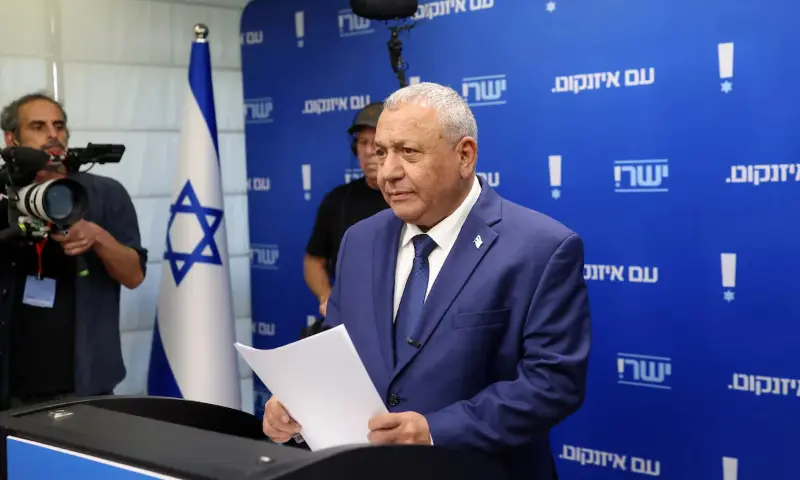
Israel’s Eisenkot downplays unity government option after meeting Netanyahu
Why This Matters
Key context: <p><a href="https://www.dawn.com/news/2046976">Gadi Eisenkot</a>, leader of Israel’s centre-right Yashar party, appeared to play down the prospects of forming a <a href="https://www.dawn.com/news/2047699">unity</a> government with Israeli Prime Minister Benjamin Netanyahu after the two men held two-hour talks on Sunday in Tel Aviv.</p> <p>Rather than an alliance with Netanyahu, Eisenkot, a former military chief, seems more likely to form a governing coalition with parties seeking to oust the veteran premier, political analysts have said.</p> <p>Sunday’s meeting was their second this month, although the first had been described as a <a href="https://www.dawn.com/news/2044487">security briefing</a> for Eisenkot. The meetings follow an inconclusive October 27 election that left neither man with a clear path to power.</p> <p>“The discussion was businesslike, with both sides seeking to bridge the substantial differences between them,” Netanyahu and Eisenkot said in a joint statement, without elaborating.</p> <p>Israel’s <em>Channel 12 news</em> later reported there were no plans for any further meetings, and it cited Eisenkot as telling Netanyahu: “I’m committed to my partners in the bloc. You’re welcome to join after the government is formed.”</p> <p>A spokesperson for Eisenkot confirmed that report.</p> <figure class='media w-full sm:w-1/2 media--right media--embed media--uneven' data-original-src='https://www.dawn.com/news/2041094/?utm_source=newskit_ai'> <div class='media__item media__item--newskitlink '> <iframe class="nk-iframe" width="100%" frameborder="0" scrolling="no" style="height:250px;position:relative" src="https://www.dawn.com/news/card/2041094" sandbox="allow-same-origin allow-scripts allow-popups allow-modals allow-forms"></iframe></div> </figure> <p>Netanyahu said on Saturday he would be willing to temporarily relinquish power in a unity government led by Eisenkot. Netanyahu, Israel’s longest-serving premier, offered to go second in a rotation agreement under any deal between his own Likud party and Eisenkot’s Yashar.</p> <h2><a id="deadline-for-talks" href="#deadline-for-talks" class="heading-permalink" aria-hidden="true" tabindex="-1" title="Permalink"></a>Deadline for talks</h2> <p>Israel’s president <a href="https://www.dawn.com/news/2042970">tapped Eisenkot</a> to try to form a government after the election. Eisenkot has until December 6 to form a government, with the possibility of a 14-day extension.</p> <p>Last week Eisenkot signed coalition deals with the left-wing Democrats and the right-wing Yisrael Beiteinu party, whose support could bring him closer to a majority in the Knesset, Israel’s parliament.</p> <p>Eisenkot and his potential partners won a total of 48 seats in <a href="https://www.dawn.com/news/2040919">the election</a>, well short of a majority in the 120-seat parliament. Netanyahu’s Likud and its alliance of far-right and ultra-Orthodox parties won a combined 53 seats.</p> <p>If Netanyahu and Eisenkot cannot agree on a unity government, Eisenkot could form a coalition with possible support from ultra-Orthodox Jewish and Arab parties.</p> <p>Yair Golan, head of the Democrats, said after the Eisenkot-Netanyahu meeting on Sunday that the Israeli public was behind Eisenkot.</p> <p>“Now is the time to form a government that will bring real change…,” he said in an X post.</p> <figure class='media w-full w-full media-- media--embed media--uneven media--tweet' data-original-src='https://x.com/YairGolan1/status/2127015631136682320'> <div class='media__item media__item--twitter '><span> <blockquote class="twitter-tweet" lang="en"> <a href="https://twitter.com/YairGolan1/status/2127015631136682320"></a> </blockquote> </span></div> </figure> This development from dawn.com highlights ongoing changes in the sector.
Gadi Eisenkot, leader of Israel’s centre-right Yashar party, appeared to play down the prospects of forming a unity government with Israeli Prime Minister Benjamin Netanyahu after the two men held two-hour talks on Sunday in Tel Aviv. Rather than an alliance with Netanyahu, Eisenkot, a former military chief, seems more likely to form a governing coalition with parties seeking to oust the veteran premier, political analysts have said. Sunday’s meeting was their second this month, although the first had been described as a security briefing for Eisenkot. The meetings follow an inconclusive October 27 election that left neither man with a clear path to power. “The discussion was businesslike, with both sides seeking to bridge the substantial differences between them,” Netanyahu and Eisenkot said in a joint statement, without elaborating. Israel’s Channel 12 news later reported there were no plans for any further meetings, and it cited Eisenkot as telling Netanyahu: “I’m committed to my partners in the bloc. You’re welcome to join after the government is formed.” A spokesperson for Eisenkot confirmed that report. Netanyahu said on Saturday he would be willing to temporarily relinquish power in a unity government led by Eisenkot. Netanyahu, Israel’s longest-serving premier, offered to go second in a rotation agreement under any deal between his own Likud party and Eisenkot’s Yashar. Deadline for talks Israel’s president tapped Eisenkot to try to form a government after the election. Eisenkot has until December 6 to form a government, with the possibility of a 14-day extension. Last week Eisenkot signed coalition deals with the left-wing Democrats and the right-wing Yisrael Beiteinu party, whose support could bring him closer to a majority in the Knesset, Israel’s parliament. Eisenkot and his potential partners won a total of 48 seats in the election, well short of a majority in the 120-seat parliament. Netanyahu’s Likud and its alliance of far-right and ultra-Orthodox parties won a combined 53 seats. If Netanyahu and Eisenkot cannot agree on a unity government, Eisenkot could form a coalition with possible support from ultra-Orthodox Jewish and Arab parties. Yair Golan, head of the Democrats, said after the Eisenkot-Netanyahu meeting on Sunday that the Israeli public was behind Eisenkot. “Now is the time to form a government that will bring real change…,” he said in an X post.
Curation & Context
This page summarizes a public news report from dawn.com. Global News Hub provides the "Why This Matters" takeaway using editorial insights and AI curation to give readers rapid, high-value context before they click through to read the full article.