Being named in FIR doesn’t preclude someone from govt service: FCC
Why This Matters
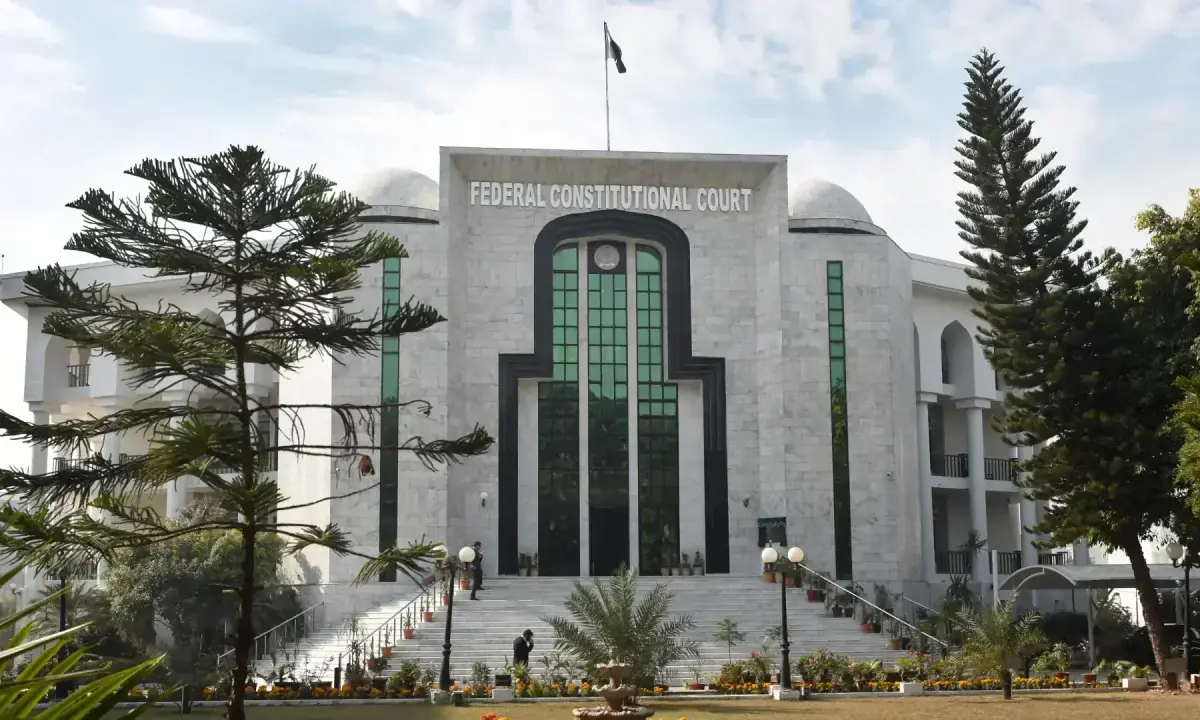
Key context: <p>• Bench distinguishes between ‘accusatory instrument’ and ‘judicially established culpability’<br /> • Holds that character verification should be based on authentic, independently verifiable material rather than conjecture or suspicion<br /> • Calls on authorities to review recruitment policies</p> <p>ISLAMABAD: The Federal Constitutional Court (FCC) on Tuesday ruled that the mere registration of an FIR could not constitute perpetual disqualification from public employment, while underlining the need for uniform, transparent and constitutionally compliant standards for verification of antecedents in public recruitment. </p> <p>The directive came as a two-judge FCC bench, consisting of Chief Justice Aminuddin Khan and Justice Ali Baqar Najafi, took up an appeal filed by Abdul Latif against a May 22, 2025, judgement of the Lahore High Court’s Multan bench, which had rejected his plea. </p> <p>The petitioner had secured second position on the merit list for the post of driver constable in the Punjab Police Department, but was denied appointment on account of his previous involvement in a criminal case. </p> <p>Despite his acquittal on Oct 11, 2018, and the subsequent issuance of police character certificates showing no criminal record, his representation was rejected by the competent authority on Sept 2, 2024. Consequently, his writ petition and subsequent intra-court appeal were also dismissed by the high court. </p> <p>Authored by Chief Justice Aminuddin Khan, the judgement examined the pivotal question of whether the prior registration of a criminal case could constitute a subsisting disqualification warranting his exclusion from appointment, even though he was acquitted by a court of competent jurisdiction before the commencement of recruitment proceedings. </p> <p>The essential consideration was whether a previous criminal accusation, despite having culminated in an acquittal, could lawfully be perpetuated as an enduring impediment to public employment, notwithstanding the candidate’s successful selection on merit, the judgement noted. </p> <p>Any such determination must necessarily conform to the constitutional imperatives of legality, equality and procedural fairness, the verdict said. </p> <p>Making a distinction between the mere registration of an FIR and judicially established culpability, the judgement noted that the former was merely an accusatory instrument, and constituted neither proof nor a presumption of guilt. </p> <p>Once an accused had been acquitted by a competent court, the appointing authority could not disregard that adjudication or treat the underlying accusation as established misconduct, the judgement emphasised. </p> <p>The FCC also laid down guiding principles for competent federal and provincial authorities, stating that mere registration of an FIR would not, ipso facto, constitute disqualification from public employment. A judicial acquittal should receive due recognition, subject to an objective assessment of the candidate’s antecedents and suitability. </p> <p>The court further held that adverse character verification should be based on authentic and independently verifiable material rather than conjecture or suspicion. Following an acquittal, the criminal case should not be reflected adversely in the police character certificate. Where proceedings remained pending, only their pendency should be disclosed, without any presumption of guilt. </p> <p>The FCC also directed the competent authorities to review and harmonise their recruitment policies in accordance with these principles, subject to the applicable statutory framework. Administrative discretion could not be used to perpetuate an unproved criminal accusation as an indelible stigma or a perpetual impediment to public employment, the judgement said, adding that such safeguards were indispensable to preserving institutional integrity, public confidence and the rule of law.</p> <p>In its concluding order, the FCC set aside the high court judgement as well as the departmental decision excluding the petitioner from appointment.</p> <p><em>Published in Dawn, November 4th, 2026</em></p> This development from dawn.com highlights ongoing changes in the sector.
• Bench distinguishes between ‘accusatory instrument’ and ‘judicially established culpability’ • Holds that character verification should be based on authentic, independently verifiable material rather than conjecture or suspicion • Calls on authorities to review recruitment policies ISLAMABAD: The Federal Constitutional Court (FCC) on Tuesday ruled that the mere registration of an FIR could not constitute perpetual disqualification from public employment, while underlining the need for uniform, transparent and constitutionally compliant standards for verification of antecedents in public recruitment. The directive came as a two-judge FCC bench, consisting of Chief Justice Aminuddin Khan and Justice Ali Baqar Najafi, took up an appeal filed by Abdul Latif against a May 22, 2025, judgement of the Lahore High Court’s Multan bench, which had rejected his plea. The petitioner had secured second position on the merit list for the post of driver constable in the Punjab Police Department, but was denied appointment on account of his previous involvement in a criminal case. Despite his acquittal on Oct 11, 2018, and the subsequent issuance of police character certificates showing no criminal record, his representation was rejected by the competent authority on Sept 2, 2024. Consequently, his writ petition and subsequent intra-court appeal were also dismissed by the high court. Authored by Chief Justice Aminuddin Khan, the judgement examined the pivotal question of whether the prior registration of a criminal case could constitute a subsisting disqualification warranting his exclusion from appointment, even though he was acquitted by a court of competent jurisdiction before the commencement of recruitment proceedings. The essential consideration was whether a previous criminal accusation, despite having culminated in an acquittal, could lawfully be perpetuated as an enduring impediment to public employment, notwithstanding the candidate’s successful selection on merit, the judgement noted. Any such determination must necessarily conform to the constitutional imperatives of legality, equality and procedural fairness, the verdict said. Making a distinction between the mere registration of an FIR and judicially established culpability, the judgement noted that the former was merely an accusatory instrument, and constituted neither proof nor a presumption of guilt. Once an accused had been acquitted by a competent court, the appointing authority could not disregard that adjudication or treat the underlying accusation as established misconduct, the judgement emphasised. The FCC also laid down guiding principles for competent federal and provincial authorities, stating that mere registration of an FIR would not, ipso facto, constitute disqualification from public employment. A judicial acquittal should receive due recognition, subject to an objective assessment of the candidate’s antecedents and suitability. The court further held that adverse character verification should be based on authentic and independently verifiable material rather than conjecture or suspicion. Following an acquittal, the criminal case should not be reflected adversely in the police character certificate. Where proceedings remained pending, only their pendency should be disclosed, without any presumption of guilt. The FCC also directed the competent authorities to review and harmonise their recruitment policies in accordance with these principles, subject to the applicable statutory framework. Administrative discretion could not be used to perpetuate an unproved criminal accusation as an indelible stigma or a perpetual impediment to public employment, the judgement said, adding that such safeguards were indispensable to preserving institutional integrity, public confidence and the rule of law. In its concluding order, the FCC set aside the high court judgement as well as the departmental decision excluding the petitioner from appointment. Published in Dawn, November 4th, 2026
Curation & Context
This page summarizes a public news report from dawn.com. Global News Hub provides the "Why This Matters" takeaway using editorial insights and AI curation to give readers rapid, high-value context before they click through to read the full article.