Wave of bomb threats afflict European flights for third time this week
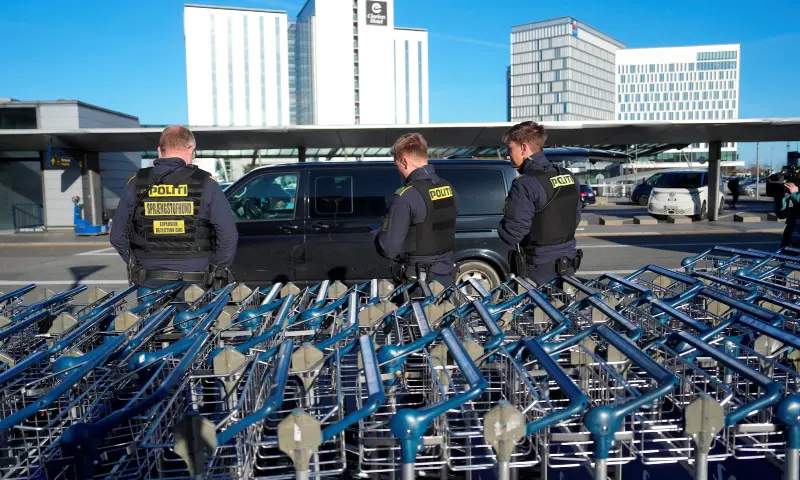
Why This Matters
Key context: <p>A wave of bomb threats were issued to passenger flights around Europe on Friday for the third time this week, as Spain’s foreign minister said the continent appeared to be facing “hybrid aggression and a form of psychological warfare”.</p> <p>Hoax threats <a href="https://www.dawn.com/news/2042486/bomb-threats-continue-to-plague-flights-to-european-destinations">disrupted</a> dozens of passenger flights across Europe on Thursday, forcing unplanned landings by some planes and prompting fighter jets to escort or intercept others, a dramatic escalation after an initial wave on Tuesday.</p> <p>No explosive devices have been found and all planes have landed safely.</p> <figure class='media w-full sm:w-1/2 media--right media--embed media--uneven' data-original-src='https://www.dawn.com/news/2041998'> <div class='media__item media__item--newskitlink '> <iframe class="nk-iframe" width="100%" frameborder="0" scrolling="no" style="height:250px;position:relative" src="https://www.dawn.com/news/card/2041998" sandbox="allow-same-origin allow-scripts allow-popups allow-modals allow-forms"></iframe></div> </figure> <p>Danish police said on Friday they were investigating threats directed at air traffic at Copenhagen airport, but that their immediate assessment was that there had been no danger to passengers.</p> <p>The airport said it was “operating normally”.</p> <p>Czech police said they had registered bomb threats to flights departing from and arriving in Prague.</p> <p>An airport spokesperson said they concerned four inbound and five outbound flights, but that no explosive devices had been found and no flights had been cancelled or diverted as a result.</p> <p>Shortly afterwards, an Italian airport authority source said a Wizz Air flight from Prague to Rome had been diverted to Venice and landed there safely.</p> <p>The French prime minister’s office said four new bomb threats had been made to aircraft flying over French territory, and that all had landed safely.</p> <p>A bomb alert on a Ryanair flight from Rome to Lisbon prompted a security operation when it landed, <em>CNN Portugal</em> reported.</p> <figure class='media w-full sm:w-full media-- ' data-original-src='https://i.dawn.com/large/2026/11/06164825f3b7eef.webp'> <div class='media__item '><picture><img src='https://i.dawn.com/large/2026/11/06164825f3b7eef.webp' width='800' height='480' srcset='https://i.dawn.com/thumbnail/2026/11/06164825f3b7eef.webp 300w, https://i.dawn.com/medium/2026/11/06164825f3b7eef.webp 500w, https://i.dawn.com/large/2026/11/06164825f3b7eef.webp 800w' sizes='(min-width: 1024px) 890px, 100vw' alt='A fire truck is parked in front of the Vaclav Havel Airport in Prague as bomb threats forced airliners to make unplanned landings across Europe, in Prague, Czech Republic, on November 5, 2026. — Reuters' /></picture></div> <figcaption class='media__caption '>A fire truck is parked in front of the Vaclav Havel Airport in Prague as bomb threats forced airliners to make unplanned landings across Europe, in Prague, Czech Republic, on November 5, 2026. — Reuters</figcaption> </figure> <h2><a id="hallmarks-of-coordinated-hybrid-attack" href="#hallmarks-of-coordinated-hybrid-attack" class="heading-permalink" aria-hidden="true" tabindex="-1" title="Permalink"></a>Hallmarks of coordinated ‘hybrid’ attack</h2> <p>Security experts said on Thursday that the threats had the hallmarks of a coordinated “hybrid attack”, although it was always possible that individuals were issuing copycat threats or acting on personal grievances.</p> <p>While no country has attributed blame for the threats, they come after a wave of sabotage attacks and attempts on targets across Europe ranging from German electricity substations to defence-related facilities in the Baltic region, supermarket refrigerators in France and elsewhere and Leipzig airport in Germany.</p> <figure class='media w-full sm:w-1/2 media--right media--embed media--uneven' data-original-src='https://www.dawn.com/news/2033914'> <div class='media__item media__item--newskitlink '> <iframe class="nk-iframe" width="100%" frameborder="0" scrolling="no" style="height:250px;position:relative" src="https://www.dawn.com/news/card/2033914" sandbox="allow-same-origin allow-scripts allow-popups allow-modals allow-forms"></iframe></div> </figure> <p>Many officials have linked the campaign to Europe’s <a href="https://www.dawn.com/news/2014002">support for Ukraine</a> in its <a href="https://www.dawn.com/news/2038692">war</a> against Russian <a href="https://www.dawn.com/news/1676939">invasion</a>, accusing Moscow of a campaign of “hybrid” disruptions that are essentially cheap to execute, easily deniable, and not expected to trigger an armed response.</p> <p>Spanish Foreign Minister José Manuel Albares told the national broadcaster <em>TVE</em> that, while it would take time to determine exactly what happened, “it cannot be mere coincidence that so many incidents with exactly the same modus operandi are happening across Europe”.</p> <p>“The most reasonable assumption is that we are facing an attempt at hybrid aggression and a form of psychological warfare,” he said, adding that Europe must be prepared for more such challenges.</p> <p>On Thursday, an airport source in Italy said bomb threats had been sent to several airlines and airport operators in Rome and Milan claiming to be from “fighters of the Male State”.</p> <p><em>Reuters</em> could not independently confirm who had sent the email and there was no immediate indication of who was behind the other threats across Europe.</p> <p>Vladislav Pozdnyakov, a Russian blogger who set up an anti-feminist movement called the Male State in 2016 that was later banned in Russia, said the group no longer existed and was not involved in any way.</p> This development from dawn.com highlights ongoing changes in the sector.
A wave of bomb threats were issued to passenger flights around Europe on Friday for the third time this week, as Spain’s foreign minister said the continent appeared to be facing “hybrid aggression and a form of psychological warfare”. Hoax threats disrupted dozens of passenger flights across Europe on Thursday, forcing unplanned landings by some planes and prompting fighter jets to escort or intercept others, a dramatic escalation after an initial wave on Tuesday. No explosive devices have been found and all planes have landed safely. Danish police said on Friday they were investigating threats directed at air traffic at Copenhagen airport, but that their immediate assessment was that there had been no danger to passengers. The airport said it was “operating normally”. Czech police said they had registered bomb threats to flights departing from and arriving in Prague. An airport spokesperson said they concerned four inbound and five outbound flights, but that no explosive devices had been found and no flights had been cancelled or diverted as a result. Shortly afterwards, an Italian airport authority source said a Wizz Air flight from Prague to Rome had been diverted to Venice and landed there safely. The French prime minister’s office said four new bomb threats had been made to aircraft flying over French territory, and that all had landed safely. A bomb alert on a Ryanair flight from Rome to Lisbon prompted a security operation when it landed, CNN Portugal reported. A fire truck is parked in front of the Vaclav Havel Airport in Prague as bomb threats forced airliners to make unplanned landings across Europe, in Prague, Czech Republic, on November 5, 2026. — Reuters Hallmarks of coordinated ‘hybrid’ attack Security experts said on Thursday that the threats had the hallmarks of a coordinated “hybrid attack”, although it was always possible that individuals were issuing copycat threats or acting on personal grievances. While no country has attributed blame for the threats, they come after a wave of sabotage attacks and attempts on targets across Europe ranging from German electricity substations to defence-related facilities in the Baltic region, supermarket refrigerators in France and elsewhere and Leipzig airport in Germany. Many officials have linked the campaign to Europe’s support for Ukraine in its war against Russian invasion, accusing Moscow of a campaign of “hybrid” disruptions that are essentially cheap to execute, easily deniable, and not expected to trigger an armed response. Spanish Foreign Minister José Manuel Albares told the national broadcaster TVE that, while it would take time to determine exactly what happened, “it cannot be mere coincidence that so many incidents with exactly the same modus operandi are happening across Europe”. “The most reasonable assumption is that we are facing an attempt at hybrid aggression and a form of psychological warfare,” he said, adding that Europe must be prepared for more such challenges. On Thursday, an airport source in Italy said bomb threats had been sent to several airlines and airport operators in Rome and Milan claiming to be from “fighters of the Male State”. Reuters could not independently confirm who had sent the email and there was no immediate indication of who was behind the other threats across Europe. Vladislav Pozdnyakov, a Russian blogger who set up an anti-feminist movement called the Male State in 2016 that was later banned in Russia, said the group no longer existed and was not involved in any way.
Curation & Context
This page summarizes a public news report from dawn.com. Global News Hub provides the "Why This Matters" takeaway using editorial insights and AI curation to give readers rapid, high-value context before they click through to read the full article.