Pakistan warns of global energy crisis as conflicts disrupt supplies
Why This Matters
Key context: <p>WASHINGTON: Pakistan has warned that the spread of conflicts is threatening global energy and food supplies, disrupting supply chains and driving up prices, with particularly severe consequences for developing countries.</p> <p>Speaking at a UN Security Council briefing on Monday, Pakistan’s Permanent Representative, Ambassador Syed Haider Shah, called for protecting critical energy infrastructure, maritime routes and global food supply chains, stressing that the growing number of conflicts was creating humanitarian and economic challenges far beyond the areas directly affected.</p> <p>“There is little doubt that our world is facing a rapidly shifting and, as a corollary, an unstable geo-political situation,” he told the council.</p> <p>He said conflicts across different regions were putting tremendous strain on global food and energy supplies, fracturing supply chains, restricting access to essential commodities and sending prices soaring.</p> <blockquote class="blockquote-level-1"> <p>Islamabad reaffirms support for peaceful resolution of disputes</p> </blockquote> <p>“The resulting humanitarian consequences have been devastating, impacting lives and livelihoods of peoples not only in the areas directly affected by these conflicts, but far beyond the confines of the conflict zones, especially the developing countries,” he said.</p> <p>Pakistan is particularly vulnerable to disruptions in Middle Eastern energy supplies because of its heavy dependence on imported oil and gas. According to the International Monetary Fund (IMF), the country is a net oil and gas importer, with 81 per cent of its fuel imports originating in Gulf Cooperation Council (GCC) countries. The Fund has warned that higher international energy prices and regional price premiums are worsening Pakistan’s economic outlook, putting pressure on its current account and threatening to push up inflation.</p> <p>The impact has also been felt in the petroleum and power sectors. Disruptions to Qatari liquefied natural gas (LNG) supplies following the outbreak of the Middle East war prompted Pakistan to consider expensive spot-market purchases and alternative fuel arrangements.</p> <p>In April, Petroleum Minister Ali Pervaiz Malik told Reuters that spot LNG cargoes were trading at between $20 and $30 per million British thermal units (mmBtu). The State Bank of Pakistan subsequently reported that inflation accelerated sharply from March 2026 onwards, averaging 10.2 per cent during March-June, driven partly by higher global energy and commodity prices following the Middle East conflict.</p> <p>The briefing, chaired by Latvian President Edgars Rinkvis, focused on protecting critical energy infrastructure and Black Sea lifelines of global food supplies. It was held under the Security Council agenda item on the maintenance of peace and security of Ukraine.</p> <p>Shah expressed deep concern over the escalation of hostilities, loss of human life and attacks on civilian infrastructure, including energy facilities, transportation networks and commercial vessels, both within conflict zones and beyond.</p> <p>Reaffirming Pakistan’s position on the primacy of international law and international humanitarian law, he said the protection of civilians and critical food and energy infrastructure must be ensured in all conflicts.</p> <p>He urged all parties to facilitate “rapid and unimpeded humanitarian assistance”, in accordance with international humanitarian law, and called for stronger international cooperation to safeguard global food and energy supply chains.</p> <p>The ambassador highlighted the close links between energy supplies, fertilisers, maritime transportation and agricultural trade, warning that disruptions in these interconnected sectors could spread food insecurity well beyond conflict-affected regions.</p> <p>Recent conflicts, he said, had demonstrated how interruptions to energy supplies and maritime transportation could have far-reaching consequences for food security and vulnerable economies.</p> <p>Emphasising that the protection of essential infrastructure alone could not provide a lasting solution, Shah called for resolving conflicts through peaceful means.</p> <p>“There can be no lasting food security without peace. There can be no substitute for the actual resolution of conflicts, through peaceful means, in accordance with the UN Charter and international law,” he stressed.</p> <p>He reaffirmed Pakistan’s support for efforts aimed at achieving enduring and peaceful resolutions to conflicts and mitigating the adverse global consequences of disruptions to food and energy supplies.</p> <p>The briefing was also addressed by UN Under-Secretary-General Rosemary DiCarlo, World Food Programme Executive Director Luke Lindberg and UN Development Programme Administrator Alexander De Croo.</p> <p><em>Published in Dawn, November 25th, 2026</em></p> This development from dawn.com highlights ongoing changes in the sector.
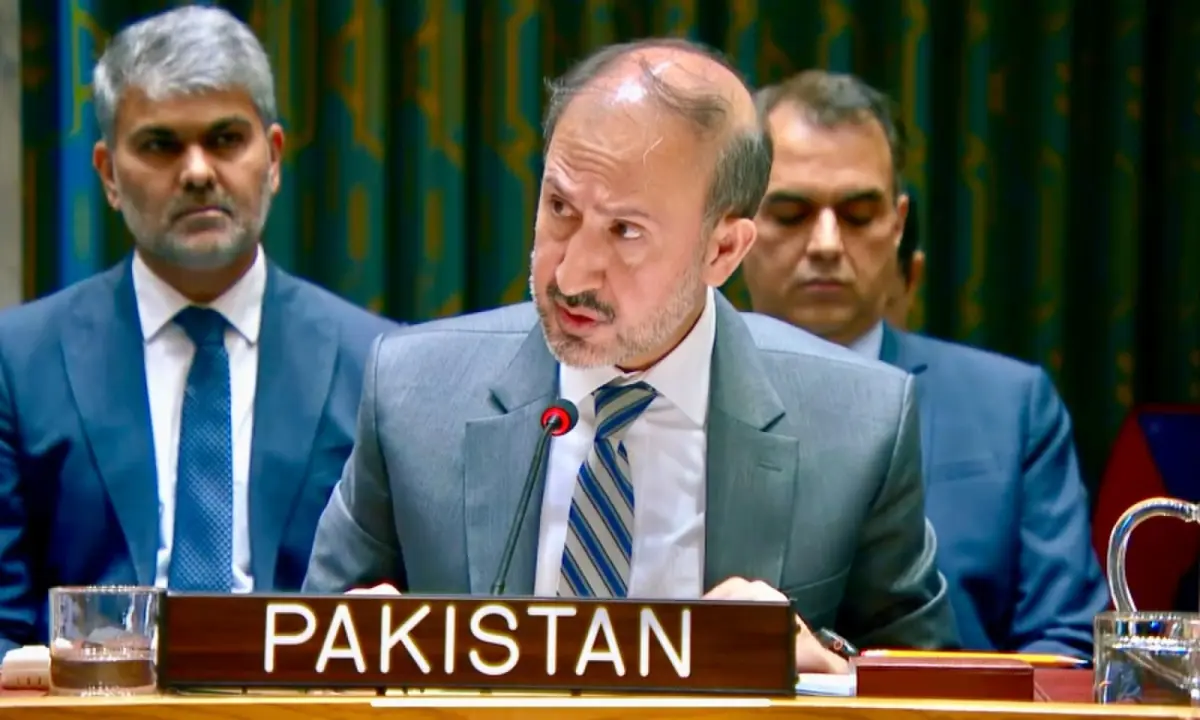
WASHINGTON: Pakistan has warned that the spread of conflicts is threatening global energy and food supplies, disrupting supply chains and driving up prices, with particularly severe consequences for developing countries. Speaking at a UN Security Council briefing on Monday, Pakistan’s Permanent Representative, Ambassador Syed Haider Shah, called for protecting critical energy infrastructure, maritime routes and global food supply chains, stressing that the growing number of conflicts was creating humanitarian and economic challenges far beyond the areas directly affected. “There is little doubt that our world is facing a rapidly shifting and, as a corollary, an unstable geo-political situation,” he told the council. He said conflicts across different regions were putting tremendous strain on global food and energy supplies, fracturing supply chains, restricting access to essential commodities and sending prices soaring. Islamabad reaffirms support for peaceful resolution of disputes “The resulting humanitarian consequences have been devastating, impacting lives and livelihoods of peoples not only in the areas directly affected by these conflicts, but far beyond the confines of the conflict zones, especially the developing countries,” he said. Pakistan is particularly vulnerable to disruptions in Middle Eastern energy supplies because of its heavy dependence on imported oil and gas. According to the International Monetary Fund (IMF), the country is a net oil and gas importer, with 81 per cent of its fuel imports originating in Gulf Cooperation Council (GCC) countries. The Fund has warned that higher international energy prices and regional price premiums are worsening Pakistan’s economic outlook, putting pressure on its current account and threatening to push up inflation. The impact has also been felt in the petroleum and power sectors. Disruptions to Qatari liquefied natural gas (LNG) supplies following the outbreak of the Middle East war prompted Pakistan to consider expensive spot-market purchases and alternative fuel arrangements. In April, Petroleum Minister Ali Pervaiz Malik told Reuters that spot LNG cargoes were trading at between $20 and $30 per million British thermal units (mmBtu). The State Bank of Pakistan subsequently reported that inflation accelerated sharply from March 2026 onwards, averaging 10.2 per cent during March-June, driven partly by higher global energy and commodity prices following the Middle East conflict. The briefing, chaired by Latvian President Edgars Rinkvis, focused on protecting critical energy infrastructure and Black Sea lifelines of global food supplies. It was held under the Security Council agenda item on the maintenance of peace and security of Ukraine. Shah expressed deep concern over the escalation of hostilities, loss of human life and attacks on civilian infrastructure, including energy facilities, transportation networks and commercial vessels, both within conflict zones and beyond. Reaffirming Pakistan’s position on the primacy of international law and international humanitarian law, he said the protection of civilians and critical food and energy infrastructure must be ensured in all conflicts. He urged all parties to facilitate “rapid and unimpeded humanitarian assistance”, in accordance with international humanitarian law, and called for stronger international cooperation to safeguard global food and energy supply chains. The ambassador highlighted the close links between energy supplies, fertilisers, maritime transportation and agricultural trade, warning that disruptions in these interconnected sectors could spread food insecurity well beyond conflict-affected regions. Recent conflicts, he said, had demonstrated how interruptions to energy supplies and maritime transportation could have far-reaching consequences for food security and vulnerable economies. Emphasising that the protection of essential infrastructure alone could not provide a lasting solution, Shah called for resolving conflicts through peaceful means. “There can be no lasting food security without peace. There can be no substitute for the actual resolution of conflicts, through peaceful means, in accordance with the UN Charter and international law,” he stressed. He reaffirmed Pakistan’s support for efforts aimed at achieving enduring and peaceful resolutions to conflicts and mitigating the adverse global consequences of disruptions to food and energy supplies. The briefing was also addressed by UN Under-Secretary-General Rosemary DiCarlo, World Food Programme Executive Director Luke Lindberg and UN Development Programme Administrator Alexander De Croo. Published in Dawn, November 25th, 2026
Curation & Context
This page summarizes a public news report from dawn.com. Global News Hub provides the "Why This Matters" takeaway using editorial insights and AI curation to give readers rapid, high-value context before they click through to read the full article.