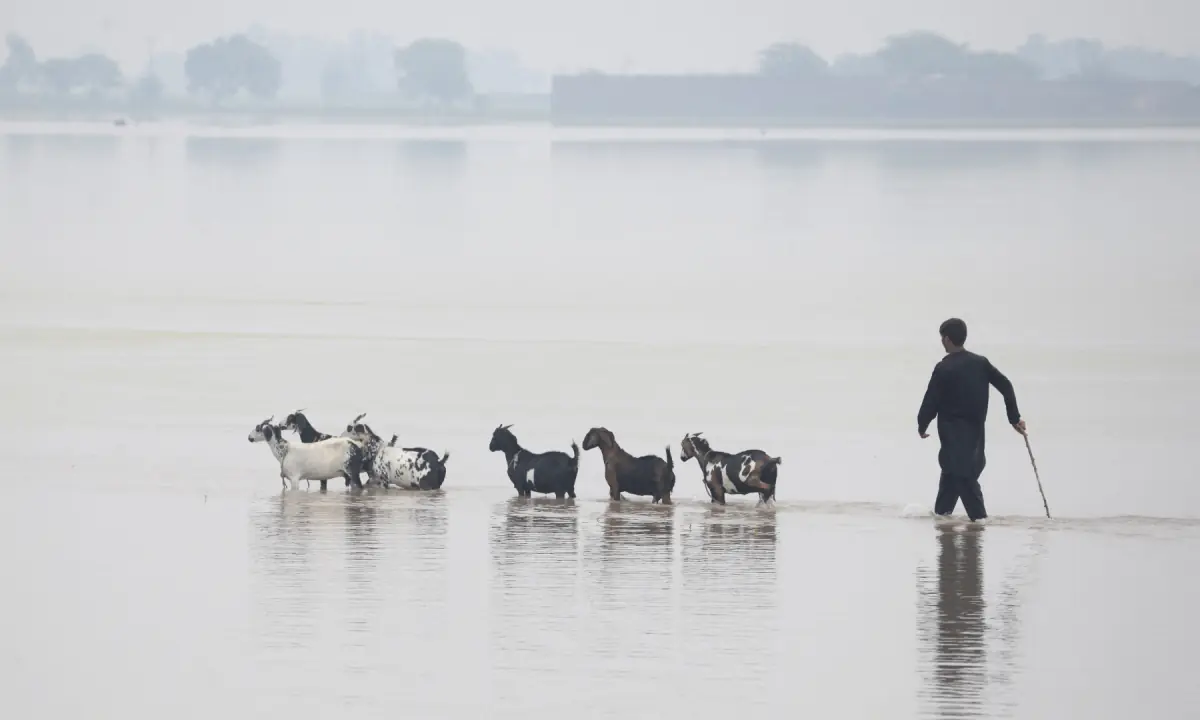
22 villages in Punjab's Multan district partially submerged under floodwaters
Why This Matters
Key context: <p>LAHORE: At least 22 <em>mouzas</em> (villages) in Multan district have been submerged under three to four feet of floodwater from the River Chenab, forcing thousands of residents to move to safer places, while standing crops over large tracts have also been damaged, according to the district administration’s latest flood situation report.</p> <p>The report compiled by the assistant commissioners, available with <em>Dawn</em>, said the district has 545 mouzas, of which 138 are flood-prone.</p> <p>It said 22 mouzas have been partially inundated with up to 3-4 feet of water, including four in Multan Saddar, seven in Shujaabad and 11 in Jalalpur Pirwala tehsils.</p> <p>Residents said the advancing floodwater drove thousands of people to relocate with their cattle to safer areas, while cotton, fodder and other standing crops were submerged, causing substantial agricultural losses.</p> <p>The district administration said no mouza had been categorised as severely affected and no formal evacuation order had been issued. It added that water levels were receding and the situation was being monitored closely across all four tehsils.</p> <p>In Multan Saddar, the affected mouzas are Abu Hatta, Vellan, Dhello and Zaman Pur. In Shujaabad, floodwaters have inundated Soman, Pounta, Tahir Pur, Marha, Agar Khawani, Dhundoon and Wanis.</p> <p>The largest number of affected villages is in Jalalpur Pirwala, where Ripri, Manik Wali, Jung Wala, Narol, Wacha Sandila, Shahpur Lamma, Bait Kaitch Janubi, Shehni Shumali, Shehni Janubi and Bait Qaiser, among others, have been affected.</p> <p>Civil society activist Majid Zahoor told <em>Dawn</em> that two union councils (UCs) of Tehsil Jalalpur, including Bait Kaitch and UC Sheeni of Jalalpur Pirwala, were submerged.</p> <p>He said that all <em>zamindara</em> bunds constructed by locals on their own to stop the water from entering their crops and houses were washed away by the water.</p> <p>Meanwhile, Multan Deputy Commissioner Dr Faisal Saleem said the flood wave in the River Chenab had receded to around 110,000 cusecs, but the district administration would remain on high alert until the river fully returned to normal.</p> <p>He added that only minor inundation had occurred in a few riverine settlements, while residents living along the Chenab belt had been advised to remain vigilant and follow official instructions.</p> <p>The DC also urged citizens to rely only on authentic government sources for updates on the flood situation and avoid rumours.</p> <figure class='media w-full w-full media-- media--embed media--uneven media--tweet' data-original-src='https://x.com/DC_Multan/status/2082424917925265501'> <div class='media__item media__item--twitter '><span> <blockquote class="twitter-tweet" lang="en"> <a href="https://twitter.com/DC_Multan/status/2082424917925265501"></a> </blockquote> </span></div> </figure> <p>Separately, the Provincial Disaster Management Authority (PDMA) said a low-level flood continued at Kalabagh and Taunsa on Indus River, while water flows in all other major rivers remained within normal limits.</p> <p>According to the PDMA’s latest river situation report, Indus River recorded an inflow of 262,219 cusecs and an outflow of 253,979 cusecs at Kalabagh, and an inflow of 310,407 cusecs and an outflow of 290,407 cusecs at Taunsa, both remaining at low flood level.</p> <p>At Tarbela, inflow stood at 246,000 cusecs and outflow at 242,100 cusecs, while Chashma recorded an inflow of 245,382 cusecs and an outflow of 236,582 cusecs, both at normal levels.</p> <p>Similarly, Chenab River continued to flow within normal limits, with 92,901 cusecs recorded at Marala, 98,403 cusecs at Khanki, 89,017 cusecs at Qadirabad, 110,677 cusecs at Trimmu and 134,622 cusecs at Panjnad.</p> <p>Jhelum River also remained normal, with 80,000 cusecs recorded at Mangla and 7,491 cusecs at Rasul.</p> <p>On Ravi River, flows remained normal at Jassar, Shahdara, Balloki and Sidhnai, while Sutlej was also flowing within normal limits at Ganda Singh Wala, Sulemanki and Islam Head.</p> <figure class='media w-full w-full media-- media--embed media--uneven media--tweet' data-original-src='https://x.com/pmdgov/status/2082388824517402796'> <div class='media__item media__item--twitter '><span> <blockquote class="twitter-tweet" lang="en"> <a href="https://twitter.com/pmdgov/status/2082388824517402796"></a> </blockquote> </span></div> </figure> <p>The PDMA warned that forecast rainfall in the upper catchment areas could increase flows in the eastern rivers and adjoining nullahs, raising the risk of flash floods.</p> <p>It also cautioned about possible urban flooding in Lahore, Rawalpindi, Gujranwala, Gujrat, Sialkot, Faisalabad and Multan, and landslides in Murree, Galiyat and other hilly areas.</p> <p>The authority urged people living in riverbeds to move to safer locations and advised the public to avoid unnecessary visits to rivers, canals and rain-fed streams. Flood relief camps were established in vulnerable areas where essential facilities and medicines were being provided.</p> <h2><a id="showers-in-islamabad-parts-of-punjab" href="#showers-in-islamabad-parts-of-punjab" class="heading-permalink" aria-hidden="true" title="Permalink"></a>Showers in Islamabad, parts of Punjab</h2> <p>Parts of Punjab and Islamabad <a href="https://www.dawn.com/news/2019213">received rain</a> on Wednesday morning, marking the onset of a fresh monsoon spell in the country just as a previous one that caused <a href="https://www.dawn.com/news/2019165"><u>flooding</u></a> in several areas of Punjab and over 100 deaths ended.</p> <p>An update by the Water and Sanitation Agency (Wasa) at 11:30am said the highest amount of rainfall in the city by then was recorded in Tajpura at 44.8 millimetres.</p> <p>It was followed by 44.4mm of rain in Mughalpura, 32.8 in Shadipura, 31.4 at Pani Wala Talab, 29mm at Chowk Nakhuda, 26.8mm in Johar Town, 26mm in Mannawan, 22.4mm at Lakshmi Chowk, 16.4mm in Farrukhabad, 7.6mm in Saggian, 6.2mm in Nishtar Town and 5.8mm at Upper Mall.</p> <p>Gulshan-i-Ravi received 1mm of rain while 0.8mm of rainfall was recorded at Jail Road and 0.2mm in Iqbal Town. Trace amounts of rainfall were also recorded at Kahna, Hdyara Defence Road, Samanabad, Airport and the Wasa head office in Gulberg.</p> <p>Separately, the Pakistan Meteorological Department (PMD) said that several areas of Sialkot, as well Jhelum, Rawalpindi, Islamabad, Narowal, Mangla and Murree also received showers between 2am and 5am.</p> <p>According to a report by the Met Office, 54mm of rain was recorded in the Sialkot city during this period while Jhelum, Rawalpindi, Islamabad, Narowal, and Murree also received showers.</p> This development from dawn.com highlights ongoing changes in the sector.
LAHORE: At least 22 mouzas (villages) in Multan district have been submerged under three to four feet of floodwater from the River Chenab, forcing thousands of residents to move to safer places, while standing crops over large tracts have also been damaged, according to the district administration’s latest flood situation report. The report compiled by the assistant commissioners, available with Dawn, said the district has 545 mouzas, of which 138 are flood-prone. It said 22 mouzas have been partially inundated with up to 3-4 feet of water, including four in Multan Saddar, seven in Shujaabad and 11 in Jalalpur Pirwala tehsils. Residents said the advancing floodwater drove thousands of people to relocate with their cattle to safer areas, while cotton, fodder and other standing crops were submerged, causing substantial agricultural losses. The district administration said no mouza had been categorised as severely affected and no formal evacuation order had been issued. It added that water levels were receding and the situation was being monitored closely across all four tehsils. In Multan Saddar, the affected mouzas are Abu Hatta, Vellan, Dhello and Zaman Pur. In Shujaabad, floodwaters have inundated Soman, Pounta, Tahir Pur, Marha, Agar Khawani, Dhundoon and Wanis. The largest number of affected villages is in Jalalpur Pirwala, where Ripri, Manik Wali, Jung Wala, Narol, Wacha Sandila, Shahpur Lamma, Bait Kaitch Janubi, Shehni Shumali, Shehni Janubi and Bait Qaiser, among others, have been affected. Civil society activist Majid Zahoor told Dawn that two union councils (UCs) of Tehsil Jalalpur, including Bait Kaitch and UC Sheeni of Jalalpur Pirwala, were submerged. He said that all zamindara bunds constructed by locals on their own to stop the water from entering their crops and houses were washed away by the water. Meanwhile, Multan Deputy Commissioner Dr Faisal Saleem said the flood wave in the River Chenab had receded to around 110,000 cusecs, but the district administration would remain on high alert until the river fully returned to normal. He added that only minor inundation had occurred in a few riverine settlements, while residents living along the Chenab belt had been advised to remain vigilant and follow official instructions. The DC also urged citizens to rely only on authentic government sources for updates on the flood situation and avoid rumours. Separately, the Provincial Disaster Management Authority (PDMA) said a low-level flood continued at Kalabagh and Taunsa on Indus River, while water flows in all other major rivers remained within normal limits. According to the PDMA’s latest river situation report, Indus River recorded an inflow of 262,219 cusecs and an outflow of 253,979 cusecs at Kalabagh, and an inflow of 310,407 cusecs and an outflow of 290,407 cusecs at Taunsa, both remaining at low flood level. At Tarbela, inflow stood at 246,000 cusecs and outflow at 242,100 cusecs, while Chashma recorded an inflow of 245,382 cusecs and an outflow of 236,582 cusecs, both at normal levels. Similarly, Chenab River continued to flow within normal limits, with 92,901 cusecs recorded at Marala, 98,403 cusecs at Khanki, 89,017 cusecs at Qadirabad, 110,677 cusecs at Trimmu and 134,622 cusecs at Panjnad. Jhelum River also remained normal, with 80,000 cusecs recorded at Mangla and 7,491 cusecs at Rasul. On Ravi River, flows remained normal at Jassar, Shahdara, Balloki and Sidhnai, while Sutlej was also flowing within normal limits at Ganda Singh Wala, Sulemanki and Islam Head. The PDMA warned that forecast rainfall in the upper catchment areas could increase flows in the eastern rivers and adjoining nullahs, raising the risk of flash floods. It also cautioned about possible urban flooding in Lahore, Rawalpindi, Gujranwala, Gujrat, Sialkot, Faisalabad and Multan, and landslides in Murree, Galiyat and other hilly areas. The authority urged people living in riverbeds to move to safer locations and advised the public to avoid unnecessary visits to rivers, canals and rain-fed streams. Flood relief camps were established in vulnerable areas where essential facilities and medicines were being provided. Showers in Islamabad, parts of Punjab Parts of Punjab and Islamabad received rain on Wednesday morning, marking the onset of a fresh monsoon spell in the country just as a previous one that caused flooding in several areas of Punjab and over 100 deaths ended. An update by the Water and Sanitation Agency (Wasa) at 11:30am said the highest amount of rainfall in the city by then was recorded in Tajpura at 44.8 millimetres. It was followed by 44.4mm of rain in Mughalpura, 32.8 in Shadipura, 31.4 at Pani Wala Talab, 29mm at Chowk Nakhuda, 26.8mm in Johar Town, 26mm in Mannawan, 22.4mm at Lakshmi Chowk, 16.4mm in Farrukhabad, 7.6mm in Saggian, 6.2mm in Nishtar Town and 5.8mm at Upper Mall. Gulshan-i-Ravi received 1mm of rain while 0.8mm of rainfall was recorded at Jail Road and 0.2mm in Iqbal Town. Trace amounts of rainfall were also recorded at Kahna, Hdyara Defence Road, Samanabad, Airport and the Wasa head office in Gulberg. Separately, the Pakistan Meteorological Department (PMD) said that several areas of Sialkot, as well Jhelum, Rawalpindi, Islamabad, Narowal, Mangla and Murree also received showers between 2am and 5am. According to a report by the Met Office, 54mm of rain was recorded in the Sialkot city during this period while Jhelum, Rawalpindi, Islamabad, Narowal, and Murree also received showers.
Curation & Context
This page summarizes a public news report from dawn.com. Global News Hub provides the "Why This Matters" takeaway using editorial insights and AI curation to give readers rapid, high-value context before they click through to read the full article.