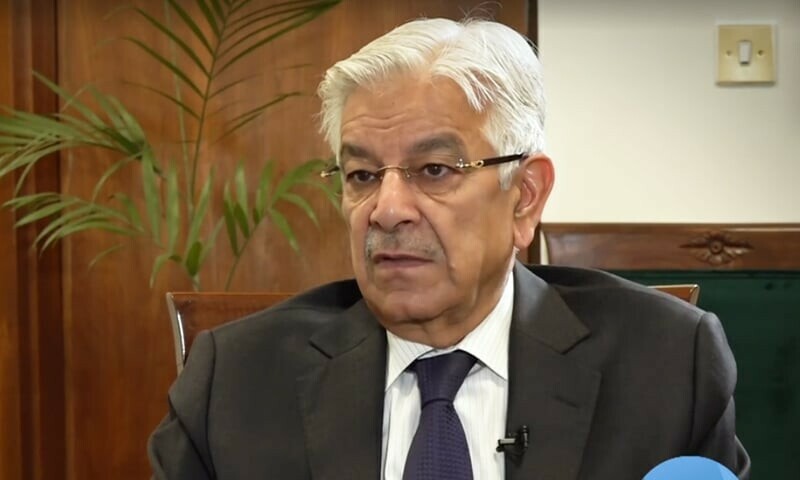
Asif says process for referendum on new provinces likely to move forward early next year
Why This Matters
Key context: <p>Defence Minister Khawaja Asif has said discussions on a possible <a href="https://www.dawn.com/news/2045936">referendum</a> to create new provinces are expected to take a “definitive shape” by the end of this year, with the process likely to move forward early next year.</p> <p>Speaking on <em>ARY News</em> programme ‘<em>Sawal Yeh Hai</em>’ on Sunday, Asif said the matter would not take long to reach a conclusion, though he refrained from giving a specific date.</p> <p>Asked whether the PML-N and the federal government had reached a principled decision on holding a referendum, and what its timeline and outline would be, he said: “Perhaps by the year-end, all this debate and discussion that is taking place will take some definitive shape. What shape it will take, I cannot say, but it won’t take long. I can certainly say that it is not going to take two to four months.”</p> <figure class='media w-full w-full media-- media--embed ' data-original-src='https://www.youtube.com/watch?v=NwIwNfOTgwc'> <div class='media__item media__item--youtube '><iframe src='https://www.youtube.com/embed/NwIwNfOTgwc?enablejsapi=1&controls=1&modestbranding=1&rel=0' loading='lazy' allow='accelerometer; autoplay; clipboard-write; encrypted-media; gyroscope; picture-in-picture' allowfullscreen='' frameborder='0' scrolling='no' width='100%' height='100%'></iframe></div> </figure> <p>He said the date could be a few days earlier or later, but the process was expected to move forward soon.</p> <p>“God willing, but it would not be appropriate for me to give a date. I cannot provide a definitive timeline, but, based on my understanding, the inevitability of this is becoming clearer day by day,” he said.</p> <p>Asked how the referendum question would be framed, given opposition from one province and the fact that previous referendums had been held under dictatorships, Asif said everyone had the right to express reservations.</p> <p>“You cannot deny someone that right if they have reservations about the entire matter and are expressing them. That is a fundamental part of a democratic society,” he said.</p> <p>He said a joint document would be prepared with input from all stakeholders to ensure that the proposal was acceptable to everyone.</p> <p>“It will be a joint document in which all the stakeholders will have their input. Rather than producing a document that falls prey to disagreement, my own view is that the efforts and back-and-forth meetings currently taking place will produce something that is acceptable to all,” he added.</p> <p>Asked whether the government would seek consensus on the referendum question to bring the PPP on board, Asif said that was precisely the intention.</p> <p>He said the question would outline the purpose and objectives of the proposed exercise, requiring people to respond with a yes or no. These objectives, he added, would also be defined through consensus.</p> <p>Regarding the constitutional requirements for holding a referendum, he said the Constitution provided for such an exercise but also laid down the procedure for constitutional amendments, which could not be bypassed.</p> <p>“There is room for a referendum in the Constitution; there is no doubt about that. However, the procedure for a constitutional amendment is also laid down in it, and no one can deviate from that procedure,” he said.</p> <p>The defence minister said the proposed changes could have far-reaching positive consequences, noting that Pakistan had previously altered its administrative map through the creation of One Unit and the subsequent establishment of provinces.</p> <p>He expressed confidence that the joint preparation of a document would address reservations and prevent major disagreements.</p> <p>“I think politics is the art of the possible, and this will definitely be made possible, God willing,” he added.</p> <p>Asif had made similar remarks a few days earlier, saying he <a href="https://www.dawn.com/news/2044802">believed </a>that a consensus was being developed on the creation of new provinces and that the process was moving towards culmination.</p> <p>Speaking on <em>Geo News</em>, he had said the new year would bring a new system and that reaching consensus could lead to a progressive change in the country’s political landscape. He had also advocated a robust local government system, saying smaller administrative units would help improve public service delivery.</p> <p>The remarks come amid a debate over the proposed creation of new provinces, with Minister for Parliamentary Affairs Tariq Fazal Chaudhry<a href="https://www.dawn.com/news/2045936"> insisting </a>last week that a referendum on the matter “will happen”.</p> <p>The issue gained renewed attention after PPP Chairman Bilawal Bhutto-Zardari <a href="https://www.dawn.com/news/2045176/?utm_source=newskit_ai">opposed</a> the creation of new provinces and the proposed referendum in a speech on Tuesday, warning that any “forced” attempt to divide provinces, particularly Sindh, could lead to bloodshed.</p> <p>The federal government, however, <a href="https://www.dawn.com/news/2045201/?utm_source=newskit_ai">maintains</a> that a referendum is a legal and constitutional means of gauging public opinion on the creation of new provinces.</p> <p>Over the past few months, Interior Minister Mohsin Naqvi has whipped up a <a href="https://www.dawn.com/news/2019825"><u>political storm</u></a> since he called for the formation of <a href="https://www.dawn.com/news/2019599"><u>new administrative units</u></a> in the country, saying the current “system” of governance had “collapsed” and needed a “reset”.</p> <p>On November 12, Naqvi also <a href="https://www.dawn.com/news/2044196"><u>floated the idea</u></a> of holding a referendum to gauge public opinion on the issue, saying the exercise could settle the contentious debate once and for all.</p> This development from dawn.com highlights ongoing changes in the sector.
Defence Minister Khawaja Asif has said discussions on a possible referendum to create new provinces are expected to take a “definitive shape” by the end of this year, with the process likely to move forward early next year. Speaking on ARY News programme ‘Sawal Yeh Hai’ on Sunday, Asif said the matter would not take long to reach a conclusion, though he refrained from giving a specific date. Asked whether the PML-N and the federal government had reached a principled decision on holding a referendum, and what its timeline and outline would be, he said: “Perhaps by the year-end, all this debate and discussion that is taking place will take some definitive shape. What shape it will take, I cannot say, but it won’t take long. I can certainly say that it is not going to take two to four months.” He said the date could be a few days earlier or later, but the process was expected to move forward soon. “God willing, but it would not be appropriate for me to give a date. I cannot provide a definitive timeline, but, based on my understanding, the inevitability of this is becoming clearer day by day,” he said. Asked how the referendum question would be framed, given opposition from one province and the fact that previous referendums had been held under dictatorships, Asif said everyone had the right to express reservations. “You cannot deny someone that right if they have reservations about the entire matter and are expressing them. That is a fundamental part of a democratic society,” he said. He said a joint document would be prepared with input from all stakeholders to ensure that the proposal was acceptable to everyone. “It will be a joint document in which all the stakeholders will have their input. Rather than producing a document that falls prey to disagreement, my own view is that the efforts and back-and-forth meetings currently taking place will produce something that is acceptable to all,” he added. Asked whether the government would seek consensus on the referendum question to bring the PPP on board, Asif said that was precisely the intention. He said the question would outline the purpose and objectives of the proposed exercise, requiring people to respond with a yes or no. These objectives, he added, would also be defined through consensus. Regarding the constitutional requirements for holding a referendum, he said the Constitution provided for such an exercise but also laid down the procedure for constitutional amendments, which could not be bypassed. “There is room for a referendum in the Constitution; there is no doubt about that. However, the procedure for a constitutional amendment is also laid down in it, and no one can deviate from that procedure,” he said. The defence minister said the proposed changes could have far-reaching positive consequences, noting that Pakistan had previously altered its administrative map through the creation of One Unit and the subsequent establishment of provinces. He expressed confidence that the joint preparation of a document would address reservations and prevent major disagreements. “I think politics is the art of the possible, and this will definitely be made possible, God willing,” he added. Asif had made similar remarks a few days earlier, saying he believed that a consensus was being developed on the creation of new provinces and that the process was moving towards culmination. Speaking on Geo News, he had said the new year would bring a new system and that reaching consensus could lead to a progressive change in the country’s political landscape. He had also advocated a robust local government system, saying smaller administrative units would help improve public service delivery. The remarks come amid a debate over the proposed creation of new provinces, with Minister for Parliamentary Affairs Tariq Fazal Chaudhry insisting last week that a referendum on the matter “will happen”. The issue gained renewed attention after PPP Chairman Bilawal Bhutto-Zardari opposed the creation of new provinces and the proposed referendum in a speech on Tuesday, warning that any “forced” attempt to divide provinces, particularly Sindh, could lead to bloodshed. The federal government, however, maintains that a referendum is a legal and constitutional means of gauging public opinion on the creation of new provinces. Over the past few months, Interior Minister Mohsin Naqvi has whipped up a political storm since he called for the formation of new administrative units in the country, saying the current “system” of governance had “collapsed” and needed a “reset”. On November 12, Naqvi also floated the idea of holding a referendum to gauge public opinion on the issue, saying the exercise could settle the contentious debate once and for all.
Curation & Context
This page summarizes a public news report from dawn.com. Global News Hub provides the "Why This Matters" takeaway using editorial insights and AI curation to give readers rapid, high-value context before they click through to read the full article.