Mir Raza’s grave is not a silent one
Why This Matters
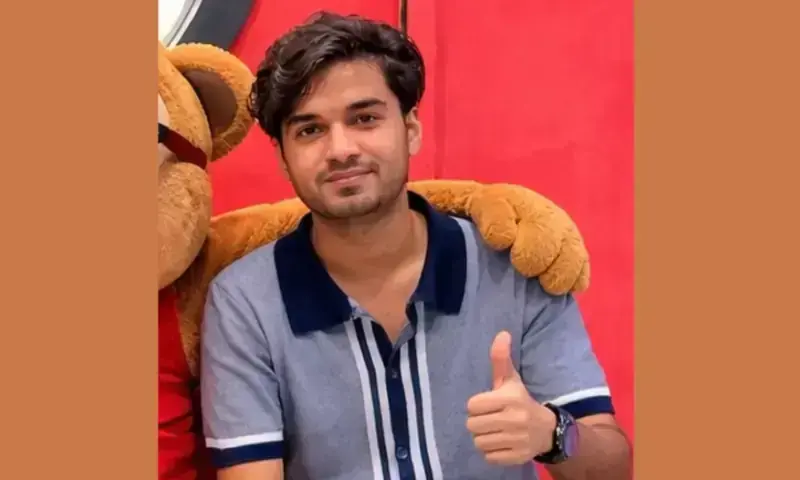
Key context: <p>There is a particular cruelty in a name being spoken twice by death. Once when it is buried. And once when it is dug up again, because the truth could not rest with it. Mir Raza, the son of Mir Hassan Ali Khan, and Wafflix business owner, was <a href="https://www.dawn.com/news/2019620">laid into the earth</a> of Rehorania Masjid graveyard on the 29th of July. Eleven days later, a board of doctors, a police surgeon, a magistrate, and a family that refused to let silence be the final word stood over that same soil and <a href="https://www.dawn.com/news/2021482">opened</a> it again.</p> <p>I have read the report. I do not think I will ever be able to unread it.</p> <p>It is written in the flat, careful language that medicine keeps for what it cannot otherwise bear to say. Somewhere inside that distance is a twenty-five-year-old man who once had a face his mother could recognise without being told his name. What the doctors found <a href="https://www.dawn.com/news/2021595">confirmed</a> what the family had feared all along, that Mir Raza did not simply die. He was taken from them. And when asked, plainly, whether his wounds came before death, someone circled a single word on the page: <em>Yes</em>.</p> <p>That word has not left me since.</p> <p>What stays with me most is not the injury itself, but the effort that surrounded it. The care taken. The insistence, even now, that this body still deserved to be handled gently, named properly, treated as someone rather than something.</p> <p>Dr Summaiya Syed, Police Surgeon of Karachi, stood at that graveside and did what very few of us are ever asked to do. She looked directly at what injustice leaves behind, and she did not turn away. There is a particular kind of courage in choosing, on an ordinary working day, to be the last honest witness a murdered man will ever have. It is not the courage of headlines. It is quieter than that, and heavier, and it asks everything of the stomach and the soul, and gives back only the satisfaction of having told the truth when it would have been so much easier not to.</p> <figure class='media w-full sm:w-1/2 media--right media--embed media--uneven' data-original-src='https://www.dawn.com/news/2021431'> <div class='media__item media__item--newskitlink '> <iframe class="nk-iframe" width="100%" frameborder="0" scrolling="no" style="height:250px;position:relative" src="https://www.dawn.com/news/card/2021431" sandbox="allow-same-origin allow-scripts allow-popups allow-modals allow-forms"></iframe></div> </figure> <p>And yet, the final word on how Mir Raza died has still not been given. Not because there is doubt. The findings speak clearly enough. It has simply not been said out loud, in the way that matters, in the place that matters. Twelve days passed, the doctors believe, between his death and the moment anyone was able to examine him. Twelve days in which a family did not know. And then more days still, in which even his grave had to be argued for, before the truth was allowed to be looked at a second time.</p> <p>We spend our lives pretending we are not what that grave revealed. We make plans, we argue over small things, we behave as though we will always have tomorrow to fix what we said today. But strip away the years, and every one of us ends the same way Mir Raza did. Plain. Unrecognisable, even to those who loved us most. If that is where we are all headed, then what exactly are we fighting for when we fight for justice? I do not think it is the body. The earth takes that regardless. I think it is the truth of what was done to someone while they were still here to feel it. That is the only part of us that does not decay. It is the only inheritance a murdered man can leave behind that no grave is deep enough to bury.</p> <p>Karachi did not let this one go quiet. Somewhere between a graveyard and a courtroom, ordinary people, neighbours, strangers, a city that has buried too many of its sons without asking enough questions, decided that Mir Raza’s silence was not going to be mistaken for peace. They spoke. They kept speaking, until an order was signed and a grave that should have been the end of his story became instead the place where it finally began to be told properly. That is not a small thing. In a country where so many cases are allowed to fade as quietly as a body returns to the earth, the refusal of ordinary citizens to look away is very often the only justice the dead will ever be given.</p> <p>So I find myself asking the only question I have left. If the truth has already been found, plainly, and written down, and confirmed by a circled word on a page, then what are we still waiting for? Where does justice go, in the space between a death and its acknowledgment? And where, in a city that loved this man loudly enough to bring him back up into the light so his story could be told rightly, does our humanity actually stand today? Not in the vigils. Not in the slogans. But in the quiet, unglamorous work of finishing what we started for Mir Raza.</p> <p>I do not have that answer yet. I am not sure any of us do. But I know this much. A city that will not let its dead be forgotten has not yet forgotten itself. And whatever else remains unresolved, that much still holds true: somewhere beneath all our exhaustion and all our grief, we still believe a man’s name is worth saying twice.</p> <hr /> <p><em><strong>Header image:</strong></em> <em>Mir Raza Ali, a 25-year-old business owner whose body was found in bushes in Karachi’s Gulistan-i-Jauhar on July 29, following which a police probe into his death is ongoing. — Instagram/Wafflix</em></p> This development from dawn.com highlights ongoing changes in the sector.
There is a particular cruelty in a name being spoken twice by death. Once when it is buried. And once when it is dug up again, because the truth could not rest with it. Mir Raza, the son of Mir Hassan Ali Khan, and Wafflix business owner, was laid into the earth of Rehorania Masjid graveyard on the 29th of July. Eleven days later, a board of doctors, a police surgeon, a magistrate, and a family that refused to let silence be the final word stood over that same soil and opened it again. I have read the report. I do not think I will ever be able to unread it. It is written in the flat, careful language that medicine keeps for what it cannot otherwise bear to say. Somewhere inside that distance is a twenty-five-year-old man who once had a face his mother could recognise without being told his name. What the doctors found confirmed what the family had feared all along, that Mir Raza did not simply die. He was taken from them. And when asked, plainly, whether his wounds came before death, someone circled a single word on the page: Yes. That word has not left me since. What stays with me most is not the injury itself, but the effort that surrounded it. The care taken. The insistence, even now, that this body still deserved to be handled gently, named properly, treated as someone rather than something. Dr Summaiya Syed, Police Surgeon of Karachi, stood at that graveside and did what very few of us are ever asked to do. She looked directly at what injustice leaves behind, and she did not turn away. There is a particular kind of courage in choosing, on an ordinary working day, to be the last honest witness a murdered man will ever have. It is not the courage of headlines. It is quieter than that, and heavier, and it asks everything of the stomach and the soul, and gives back only the satisfaction of having told the truth when it would have been so much easier not to. And yet, the final word on how Mir Raza died has still not been given. Not because there is doubt. The findings speak clearly enough. It has simply not been said out loud, in the way that matters, in the place that matters. Twelve days passed, the doctors believe, between his death and the moment anyone was able to examine him. Twelve days in which a family did not know. And then more days still, in which even his grave had to be argued for, before the truth was allowed to be looked at a second time. We spend our lives pretending we are not what that grave revealed. We make plans, we argue over small things, we behave as though we will always have tomorrow to fix what we said today. But strip away the years, and every one of us ends the same way Mir Raza did. Plain. Unrecognisable, even to those who loved us most. If that is where we are all headed, then what exactly are we fighting for when we fight for justice? I do not think it is the body. The earth takes that regardless. I think it is the truth of what was done to someone while they were still here to feel it. That is the only part of us that does not decay. It is the only inheritance a murdered man can leave behind that no grave is deep enough to bury. Karachi did not let this one go quiet. Somewhere between a graveyard and a courtroom, ordinary people, neighbours, strangers, a city that has buried too many of its sons without asking enough questions, decided that Mir Raza’s silence was not going to be mistaken for peace. They spoke. They kept speaking, until an order was signed and a grave that should have been the end of his story became instead the place where it finally began to be told properly. That is not a small thing. In a country where so many cases are allowed to fade as quietly as a body returns to the earth, the refusal of ordinary citizens to look away is very often the only justice the dead will ever be given. So I find myself asking the only question I have left. If the truth has already been found, plainly, and written down, and confirmed by a circled word on a page, then what are we still waiting for? Where does justice go, in the space between a death and its acknowledgment? And where, in a city that loved this man loudly enough to bring him back up into the light so his story could be told rightly, does our humanity actually stand today? Not in the vigils. Not in the slogans. But in the quiet, unglamorous work of finishing what we started for Mir Raza. I do not have that answer yet. I am not sure any of us do. But I know this much. A city that will not let its dead be forgotten has not yet forgotten itself. And whatever else remains unresolved, that much still holds true: somewhere beneath all our exhaustion and all our grief, we still believe a man’s name is worth saying twice. Header image: Mir Raza Ali, a 25-year-old business owner whose body was found in bushes in Karachi’s Gulistan-i-Jauhar on July 29, following which a police probe into his death is ongoing. — Instagram/Wafflix
Curation & Context
This page summarizes a public news report from dawn.com. Global News Hub provides the "Why This Matters" takeaway using editorial insights and AI curation to give readers rapid, high-value context before they click through to read the full article.