Heavy monsoon rains lash Lahore, disrupt routine life
Why This Matters
Key context: <p>LAHORE: Heavy monsoon <a href="https://www.dawn.com/news/2017532">rains</a> caused widespread water accumulation across Lahore on Thursday, disrupting routine life, slowing traffic and creating difficulties for commuters as rainwater remained stagnant on major roads, intersections and underpasses in several parts of the provincial capital.</p> <p>Despite claims by the district administration and the Water and Sanitation Agency (Wasa) Lahore that drainage operations were being carried out on an emergency basis, residents faced difficulties due to three to four feet of standing water on streets, roads and submerged underpasses, along with slow traffic movement.</p> <figure class='media w-full w-full media-- media--embed media--uneven' data-original-src='https://www.youtube.com/shorts/2EZEw_zcYy8'> <div class='media__item media__item--youtube_short media__item--relative'> <div style="position: relative; aspect-ratio: 9 / 16; overflow: hidden; max-width: 360px; margin: auto"> <iframe src="https://www.youtube.com/embed/2EZEw_zcYy8?enablejsapi=1&controls=1&modestbranding=1&rel=0" style="position: absolute; top: 0; left: 0; width: 100%; height: 100%; border: 0;" loading="lazy" allowfullscreen ></iframe> </div></div> </figure> <p>The city received 343 millimetres of rain over the past 48 hours, according to the Provincial Disaster Management Authority (PDMA), which warned of possible urban flooding during the <a href="https://www.dawn.com/news/2013699">second spell</a> of monsoon rains.</p> <p>Rainwater accumulated at more than 130 locations across Lahore, affecting traffic movement in several areas. Low-lying localities, major roads and underpasses remained among the worst-affected points.</p> <p>In DHA Phases 1 to 5, water accumulation disrupted traffic at multiple locations. Around two feet of water accumulated from Defence Mor to A Block Checkpost, slowing the movement of vehicles.</p> <p>The Ghazi Underpass and Masjid Chowk Underpass were closed due to heavy water accumulation, while traffic was diverted to alternate routes.</p> <p>Traffic movement was also affected from Lalak Jan Chowk to LUMS Road, Watain Chowk to LUMS, Main Boulevard DHA and on the route from Masjid Chowk to Ghazi Chowk.</p> <p>Vehicles were diverted through Z Block and other alternate routes due to the closure of underpasses.</p> <p>Other areas reporting water accumulation included Harbanspura, Mall Road, Cooper Road, Lakshmi Chowk and Chouburji Chowk, where Wasa teams carried out drainage operations.</p> <p>The rain also exposed recurring urban drainage challenges as water entered houses in low-lying areas of the city, while commuters complained about difficulties travelling through <a href="https://www.dawn.com/news/2017687">flooded roads</a> and underpasses.</p> <p>Many citizens complained that the authorities had not taken any measures to drain water from their houses, leaving them to remove it from their homes and streets on their own.</p> <p>Citizens also faced delays as vehicles became stranded in rainwater on roads, forcing motorists to move slowly through standing water, while some avoided major roads due to the risk of breakdowns.</p> <figure class='media w-full sm:w-1/2 media--right media--embed media--uneven' data-original-src='https://www.dawn.com/news/2016628'> <div class='media__item media__item--newskitlink '> <iframe class="nk-iframe" width="100%" frameborder="0" scrolling="no" style="height:250px;position:relative" src="https://www.dawn.com/news/card/2016628" sandbox="allow-same-origin allow-scripts allow-popups allow-modals allow-forms"></iframe></div> </figure> <p>Several deep sinkholes, measuring around 10 square feet, appeared on three to four roads across the city, including Canal Road, Johar Town Main Boulevard and Bhekay Wala Mor, causing parts of the roads to collapse. Lahore traffic police cordoned off the affected areas and diverted traffic after Wasa teams reached the sites.</p> <p>Another sinkhole reappeared on Khayaban-i-Firdousi, where barriers were placed as a precautionary measure and traffic was diverted to alternate routes.</p> <p>The PDMA said that so far 21 people had died and 154 others had been injured in rain-related incidents across Punjab during the ongoing monsoon season.</p> <p>Fifteen deaths occurred due to building collapses, two due to lightning strikes, three due to electrocution and one person drowned. At least 38 houses also sustained partial damage.</p> <p>PDMA Director General Umar Abbas Mela directed district administrations to remain on high alert and warned of urban and flash flooding risks.</p> <p>He advised citizens to avoid weak structures, low-lying areas and contact with electricity poles and wires during rainfall.</p> <p>Meanwhile, Wasa Lahore said it had placed its teams on <a href="https://www.dawn.com/news/2014232">high alert</a> and launched emergency drainage operations.</p> <p>Wasa Managing Director Ghufran Ahmed visited several affected areas, including Mall Road, Cooper Road, Lakshmi Chowk and Chouburji Chowk, to monitor rainwater removal operations.</p> <figure class='media w-full w-full media-- media--embed media--uneven media--tweet' data-original-src='https://x.com/DCLahore/status/2080270159621836901'> <div class='media__item media__item--twitter '><span> <blockquote class="twitter-tweet" lang="en"> <a href="https://twitter.com/DCLahore/status/2080270159621836901"></a> </blockquote> </span></div> </figure> <p>He said all disposal stations were operating at full capacity, while additional machinery and staff had been deployed at water accumulation points. More than 21 monsoon emergency relief camps had also been made operational.</p> <p>He said Wasa’s 24/7 monsoon control room was monitoring the situation through more than 200 live cameras, including those installed at underpasses across the city.</p> <p>Lahore Deputy Commissioner retired Capt Ali Ijaz also visited Harbanspura and other areas to review drainage operations.</p> <p>He claimed that most major roads and waterlogged points had been cleared in record time, while the remaining low-lying areas would be drained soon.</p> <p>The administration and Wasa urged citizens to avoid unnecessary travel during heavy rainfall, stay away from electricity infrastructure, avoid driving through flooded areas and report water accumulation to Wasa through its helpline, 1334.</p> <p>However, residents criticised the recurring problem of water accumulation in Lahore, saying that despite repeated monsoon preparations, poor drainage capacity, blocked sewer lines and delays in rainwater removal continued to create difficulties for citizens every year.</p> <p>Meanwhile, Chief Traffic Officer (CTO) Syed Abdul Raheem Sherazi directed officials to cordon off the sinkholes on different roads across the city and take measures to provide alternate routes to citizens for smooth travel.</p> <p>He also deployed traffic officials outside the underpasses to divert traffic. “Rain duty with commitment, professionalism and public safety is their top priority,” he said.</p> This development from dawn.com highlights ongoing changes in the sector.
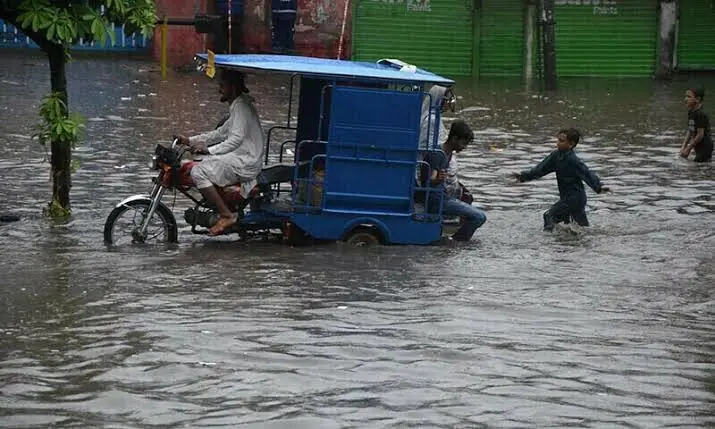
LAHORE: Heavy monsoon rains caused widespread water accumulation across Lahore on Thursday, disrupting routine life, slowing traffic and creating difficulties for commuters as rainwater remained stagnant on major roads, intersections and underpasses in several parts of the provincial capital. Despite claims by the district administration and the Water and Sanitation Agency (Wasa) Lahore that drainage operations were being carried out on an emergency basis, residents faced difficulties due to three to four feet of standing water on streets, roads and submerged underpasses, along with slow traffic movement. The city received 343 millimetres of rain over the past 48 hours, according to the Provincial Disaster Management Authority (PDMA), which warned of possible urban flooding during the second spell of monsoon rains. Rainwater accumulated at more than 130 locations across Lahore, affecting traffic movement in several areas. Low-lying localities, major roads and underpasses remained among the worst-affected points. In DHA Phases 1 to 5, water accumulation disrupted traffic at multiple locations. Around two feet of water accumulated from Defence Mor to A Block Checkpost, slowing the movement of vehicles. The Ghazi Underpass and Masjid Chowk Underpass were closed due to heavy water accumulation, while traffic was diverted to alternate routes. Traffic movement was also affected from Lalak Jan Chowk to LUMS Road, Watain Chowk to LUMS, Main Boulevard DHA and on the route from Masjid Chowk to Ghazi Chowk. Vehicles were diverted through Z Block and other alternate routes due to the closure of underpasses. Other areas reporting water accumulation included Harbanspura, Mall Road, Cooper Road, Lakshmi Chowk and Chouburji Chowk, where Wasa teams carried out drainage operations. The rain also exposed recurring urban drainage challenges as water entered houses in low-lying areas of the city, while commuters complained about difficulties travelling through flooded roads and underpasses. Many citizens complained that the authorities had not taken any measures to drain water from their houses, leaving them to remove it from their homes and streets on their own. Citizens also faced delays as vehicles became stranded in rainwater on roads, forcing motorists to move slowly through standing water, while some avoided major roads due to the risk of breakdowns. Several deep sinkholes, measuring around 10 square feet, appeared on three to four roads across the city, including Canal Road, Johar Town Main Boulevard and Bhekay Wala Mor, causing parts of the roads to collapse. Lahore traffic police cordoned off the affected areas and diverted traffic after Wasa teams reached the sites. Another sinkhole reappeared on Khayaban-i-Firdousi, where barriers were placed as a precautionary measure and traffic was diverted to alternate routes. The PDMA said that so far 21 people had died and 154 others had been injured in rain-related incidents across Punjab during the ongoing monsoon season. Fifteen deaths occurred due to building collapses, two due to lightning strikes, three due to electrocution and one person drowned. At least 38 houses also sustained partial damage. PDMA Director General Umar Abbas Mela directed district administrations to remain on high alert and warned of urban and flash flooding risks. He advised citizens to avoid weak structures, low-lying areas and contact with electricity poles and wires during rainfall. Meanwhile, Wasa Lahore said it had placed its teams on high alert and launched emergency drainage operations. Wasa Managing Director Ghufran Ahmed visited several affected areas, including Mall Road, Cooper Road, Lakshmi Chowk and Chouburji Chowk, to monitor rainwater removal operations. He said all disposal stations were operating at full capacity, while additional machinery and staff had been deployed at water accumulation points. More than 21 monsoon emergency relief camps had also been made operational. He said Wasa’s 24/7 monsoon control room was monitoring the situation through more than 200 live cameras, including those installed at underpasses across the city. Lahore Deputy Commissioner retired Capt Ali Ijaz also visited Harbanspura and other areas to review drainage operations. He claimed that most major roads and waterlogged points had been cleared in record time, while the remaining low-lying areas would be drained soon. The administration and Wasa urged citizens to avoid unnecessary travel during heavy rainfall, stay away from electricity infrastructure, avoid driving through flooded areas and report water accumulation to Wasa through its helpline, 1334. However, residents criticised the recurring problem of water accumulation in Lahore, saying that despite repeated monsoon preparations, poor drainage capacity, blocked sewer lines and delays in rainwater removal continued to create difficulties for citizens every year. Meanwhile, Chief Traffic Officer (CTO) Syed Abdul Raheem Sherazi directed officials to cordon off the sinkholes on different roads across the city and take measures to provide alternate routes to citizens for smooth travel. He also deployed traffic officials outside the underpasses to divert traffic. “Rain duty with commitment, professionalism and public safety is their top priority,” he said.
Curation & Context
This page summarizes a public news report from dawn.com. Global News Hub provides the "Why This Matters" takeaway using editorial insights and AI curation to give readers rapid, high-value context before they click through to read the full article.