Pakistan links regional cooperation with Afghanistan to action against terrorism at ECO moot
Why This Matters
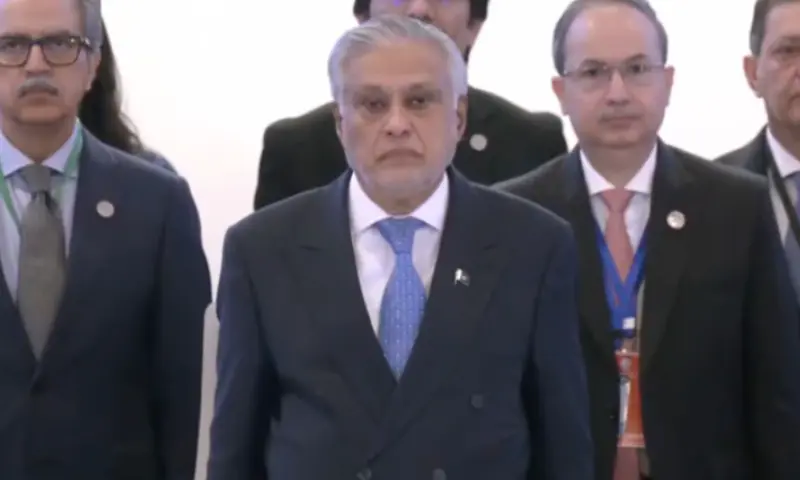
Key context: <p>Pakistan desires a peaceful, prosperous and stable Afghanistan, but meaningful progress towards regional cooperation requires the Afghan authorities to address the legitimate security concerns of neighbouring countries, particularly the threat of terrorism, Deputy Prime Minister and Foreign Minister Ishaq Dar said on Monday.</p> <p>He was addressing the 30th meeting of the Economic Cooperation Organisation (ECO) Council of Ministers in Islamabad, where dignitaries from ECO member states have converged to attend the moot.</p> <p>Currently, Pakistan, Afghanistan, Azerbaijan, Tajikistan, Iran, Turkiye, Kazakhstan, Turkmenistan, Kyrgyz Republic and Uzbekistan are <a rel="noopener noreferrer" target="_blank" class="link--external" href="https://eco.int/member-states/"><u>part</u></a> of the ECO.</p> <p>However, no one from Afghanistan is attending the moot, according to the list of delegations for the meeting shared by the Foreign Office.</p> <p>In his opening remarks at the meeting, Dar said a stable Afghanistan, at peace with itself and all its neighbours and fully integrated into the ECO framework, would benefit the Afghan people as well as the wider region by opening up avenues for trade, transit and economic cooperation.</p> <p>“At the same time, meaningful progress requires the Afghan authorities to address the legitimate security concerns of the neighbouring countries, particularly the threat of terrorism,” he added.</p> <p>He stressed that a secure and stable environment was essential for sustained regional economic partnerships, adding that these considerations remained central to Pakistan’s broader connectivity agenda.</p> <p>“Regional connectivity rests on more than the routes that link us. It depends upon trust between states and confidence that international commitments will be honoured. Unresolved disputes and the non-fulfillment of international obligations can erode that trust and impede economic progress,” said Dar.</p> <p>The foreign minister emphasised that respect for international law and treaties is essential to enduring economic partnerships between countries.</p> <p>Pakistan, which holds the ECO chairmanship for 2026-27, is hosting the meeting under the theme “Reviving Regionalism for a Resilient ECO”.</p> <h2><a id="five-priorities" href="#five-priorities" class="heading-permalink" aria-hidden="true" tabindex="-1" title="Permalink"></a>Five priorities</h2> <p>Outlining Pakistan’s priorities during its chairmanship of the ECO, Dar identified five key areas of focus, including expanding trade and investment, strengthening regional connectivity, advancing the ECO Trade Agreement, building regional resilience and promoting human development.</p> <p>The foreign minister said the region’s natural resources, energy reserves, agricultural potential and strategic location offered considerable opportunities for economic cooperation, but realising that potential required functioning transport corridors, efficient border procedures and predictable transit arrangements.</p> <p>He said Pakistan would work towards wider market access, stronger regional value chains and greater private sector participation, particularly by small and medium-sized enterprises, to boost trade and investment among member states.</p> <p>“Closer interaction among our business communities can help translate commercial potential into greater trade and investment.”</p> <p>On connectivity, Dar said Pakistan would seek to improve transport and transit links between Central Asia, South Asia and Pakistani ports on the Arabian Sea. Harmonised customs procedures, efficient border management and predictable transit arrangements were essential to making regional trade routes commercially viable, he added.</p> <p>The foreign minister also highlighted the need to advance the ECO Trade Agreement, saying the negotiating strategy and roadmap approved by ECO trade ministers in November 2025 provided a basis for modernising the agreement. Pakistan would support efforts to develop a more effective, inclusive and digitally enabled regional trade framework, he said.</p> <p>On regional resilience, Dar called for closer cooperation in disaster preparedness, early warning systems, sustainable water management and climate-resilient infrastructure, noting that climate change and growing pressure on water and energy resources posed serious challenges to regional economies.</p> <p>He also underscored the importance of human development, particularly in education, research, innovation and vocational training, saying greater opportunities in these areas could equip young people with skills needed by changing economies. Promoting entrepreneurship and professional exchanges would further strengthen regional integration, he added.</p> <p>The foreign minister maintained that the five priorities were interconnected and their success would depend on collective efforts by member states. He expressed Pakistan’s readiness to work with ECO members and the organisation’s secretariat on initiatives relating to trade facilitation, transit connectivity and disaster preparedness.</p> <h2><a id="regional-peace-and-diplomatic-efforts" href="#regional-peace-and-diplomatic-efforts" class="heading-permalink" aria-hidden="true" tabindex="-1" title="Permalink"></a>Regional peace and diplomatic efforts</h2> <p>Dar cautioned that peace and stability were essential for economic development, warning that conflict and insecurity in the region could disrupt trade routes, energy supplies, investment and economic projects.</p> <p>“Peace and development reinforce each other,” he said.</p> <p>He added that Pakistan remained “deeply concerned about conflict and instability” in the region.</p> <p>“Their consequences extend beyond national boundaries, disrupting trade routes, energy supplies, investment, and the economic projects of our peoples.”</p> <p>He said that Pakistan has consistently advocated for “the peaceful resolution of disputes through dialogue and diplomacy in accordance with international law and the United Nations Charter”.</p> <p>Referring to Pakistan’s diplomatic efforts in the US-Israeli war on Iran, Dar said, “Pakistan will continue these diplomatic efforts in support of dialogue, de-escalation, and lasting regional stability.”</p> <p>He said that Prime Minister Shehbaz Sharif and Chief of Defence Forces and Chief of the Army Staff Field Marshal Asim Munir “remained closely engaged with brotherly countries and international partners to facilitate peaceful outcomes”.</p> <h2><a id="senior-officials-meet-to-finalise-agenda" href="#senior-officials-meet-to-finalise-agenda" class="heading-permalink" aria-hidden="true" tabindex="-1" title="Permalink"></a>Senior officials meet to finalise agenda</h2> <p>Senior officials of the ECO finalised the agenda and draft Islamabad Communiqué ahead of the organisation’s 30th Council of Ministers meeting.</p> <p>According to a statement issued by the Ministry of Foreign Affairs (MoFA), the Senior Officials Meeting (SOM) was held on Nov 15 under the chairmanship of Foreign Secretary Ambassador Asim Iftikhar Ahmad.</p> <figure class='media w-full w-full media-- media--embed media--uneven media--tweet' data-original-src='https://x.com/ForeignOfficePk/status/2122179349185216649?a=B9RYb5NhDO0QE5DEcmM&s=20'> <div class='media__item media__item--twitter '><span> <blockquote class="twitter-tweet" lang="en"> <a href="https://twitter.com/ForeignOfficePk/status/2122179349185216649?a=B9RYb5NhDO0QE5DEcmM&s=20"></a> </blockquote> </span></div> </figure> <p>The meeting was attended by senior officials from ECO member states, representatives of the ECO Secretariat, and delegates from the organisation’s specialised agencies and regional institutions.</p> <p>The officials reviewed preparations for the ministerial meeting and finalised its agenda and the draft Islamabad Communique for consideration by the foreign ministers.</p> <p>They also reviewed the activities undertaken by the ECO Secretariat during the year, including ongoing programmes and initiatives, outcomes of sectoral ministerial meetings, and the work of subsidiary bodies and specialised institutions, the ministry said.</p> <p>Administrative and financial matters of the organisation also came under discussion, with participants exchanging views on measures to improve its effectiveness.</p> <p>The SOM serves as a preparatory forum for the Council of Ministers, enabling member states to assess progress, discuss issues of mutual interest and build consensus on proposals and draft documents ahead of ministerial-level deliberations.</p> This development from dawn.com highlights ongoing changes in the sector.
Pakistan desires a peaceful, prosperous and stable Afghanistan, but meaningful progress towards regional cooperation requires the Afghan authorities to address the legitimate security concerns of neighbouring countries, particularly the threat of terrorism, Deputy Prime Minister and Foreign Minister Ishaq Dar said on Monday. He was addressing the 30th meeting of the Economic Cooperation Organisation (ECO) Council of Ministers in Islamabad, where dignitaries from ECO member states have converged to attend the moot. Currently, Pakistan, Afghanistan, Azerbaijan, Tajikistan, Iran, Turkiye, Kazakhstan, Turkmenistan, Kyrgyz Republic and Uzbekistan are part of the ECO. However, no one from Afghanistan is attending the moot, according to the list of delegations for the meeting shared by the Foreign Office. In his opening remarks at the meeting, Dar said a stable Afghanistan, at peace with itself and all its neighbours and fully integrated into the ECO framework, would benefit the Afghan people as well as the wider region by opening up avenues for trade, transit and economic cooperation. “At the same time, meaningful progress requires the Afghan authorities to address the legitimate security concerns of the neighbouring countries, particularly the threat of terrorism,” he added. He stressed that a secure and stable environment was essential for sustained regional economic partnerships, adding that these considerations remained central to Pakistan’s broader connectivity agenda. “Regional connectivity rests on more than the routes that link us. It depends upon trust between states and confidence that international commitments will be honoured. Unresolved disputes and the non-fulfillment of international obligations can erode that trust and impede economic progress,” said Dar. The foreign minister emphasised that respect for international law and treaties is essential to enduring economic partnerships between countries. Pakistan, which holds the ECO chairmanship for 2026-27, is hosting the meeting under the theme “Reviving Regionalism for a Resilient ECO”. Five priorities Outlining Pakistan’s priorities during its chairmanship of the ECO, Dar identified five key areas of focus, including expanding trade and investment, strengthening regional connectivity, advancing the ECO Trade Agreement, building regional resilience and promoting human development. The foreign minister said the region’s natural resources, energy reserves, agricultural potential and strategic location offered considerable opportunities for economic cooperation, but realising that potential required functioning transport corridors, efficient border procedures and predictable transit arrangements. He said Pakistan would work towards wider market access, stronger regional value chains and greater private sector participation, particularly by small and medium-sized enterprises, to boost trade and investment among member states. “Closer interaction among our business communities can help translate commercial potential into greater trade and investment.” On connectivity, Dar said Pakistan would seek to improve transport and transit links between Central Asia, South Asia and Pakistani ports on the Arabian Sea. Harmonised customs procedures, efficient border management and predictable transit arrangements were essential to making regional trade routes commercially viable, he added. The foreign minister also highlighted the need to advance the ECO Trade Agreement, saying the negotiating strategy and roadmap approved by ECO trade ministers in November 2025 provided a basis for modernising the agreement. Pakistan would support efforts to develop a more effective, inclusive and digitally enabled regional trade framework, he said. On regional resilience, Dar called for closer cooperation in disaster preparedness, early warning systems, sustainable water management and climate-resilient infrastructure, noting that climate change and growing pressure on water and energy resources posed serious challenges to regional economies. He also underscored the importance of human development, particularly in education, research, innovation and vocational training, saying greater opportunities in these areas could equip young people with skills needed by changing economies. Promoting entrepreneurship and professional exchanges would further strengthen regional integration, he added. The foreign minister maintained that the five priorities were interconnected and their success would depend on collective efforts by member states. He expressed Pakistan’s readiness to work with ECO members and the organisation’s secretariat on initiatives relating to trade facilitation, transit connectivity and disaster preparedness. Regional peace and diplomatic efforts Dar cautioned that peace and stability were essential for economic development, warning that conflict and insecurity in the region could disrupt trade routes, energy supplies, investment and economic projects. “Peace and development reinforce each other,” he said. He added that Pakistan remained “deeply concerned about conflict and instability” in the region. “Their consequences extend beyond national boundaries, disrupting trade routes, energy supplies, investment, and the economic projects of our peoples.” He said that Pakistan has consistently advocated for “the peaceful resolution of disputes through dialogue and diplomacy in accordance with international law and the United Nations Charter”. Referring to Pakistan’s diplomatic efforts in the US-Israeli war on Iran, Dar said, “Pakistan will continue these diplomatic efforts in support of dialogue, de-escalation, and lasting regional stability.” He said that Prime Minister Shehbaz Sharif and Chief of Defence Forces and Chief of the Army Staff Field Marshal Asim Munir “remained closely engaged with brotherly countries and international partners to facilitate peaceful outcomes”. Senior officials meet to finalise agenda Senior officials of the ECO finalised the agenda and draft Islamabad Communiqué ahead of the organisation’s 30th Council of Ministers meeting. According to a statement issued by the Ministry of Foreign Affairs (MoFA), the Senior Officials Meeting (SOM) was held on Nov 15 under the chairmanship of Foreign Secretary Ambassador Asim Iftikhar Ahmad. The meeting was attended by senior officials from ECO member states, representatives of the ECO Secretariat, and delegates from the organisation’s specialised agencies and regional institutions. The officials reviewed preparations for the ministerial meeting and finalised its agenda and the draft Islamabad Communique for consideration by the foreign ministers. They also reviewed the activities undertaken by the ECO Secretariat during the year, including ongoing programmes and initiatives, outcomes of sectoral ministerial meetings, and the work of subsidiary bodies and specialised institutions, the ministry said. Administrative and financial matters of the organisation also came under discussion, with participants exchanging views on measures to improve its effectiveness. The SOM serves as a preparatory forum for the Council of Ministers, enabling member states to assess progress, discuss issues of mutual interest and build consensus on proposals and draft documents ahead of ministerial-level deliberations.
Curation & Context
This page summarizes a public news report from dawn.com. Global News Hub provides the "Why This Matters" takeaway using editorial insights and AI curation to give readers rapid, high-value context before they click through to read the full article.