CCD's school bag inspections in Punjab spark criticism on social media
Why This Matters
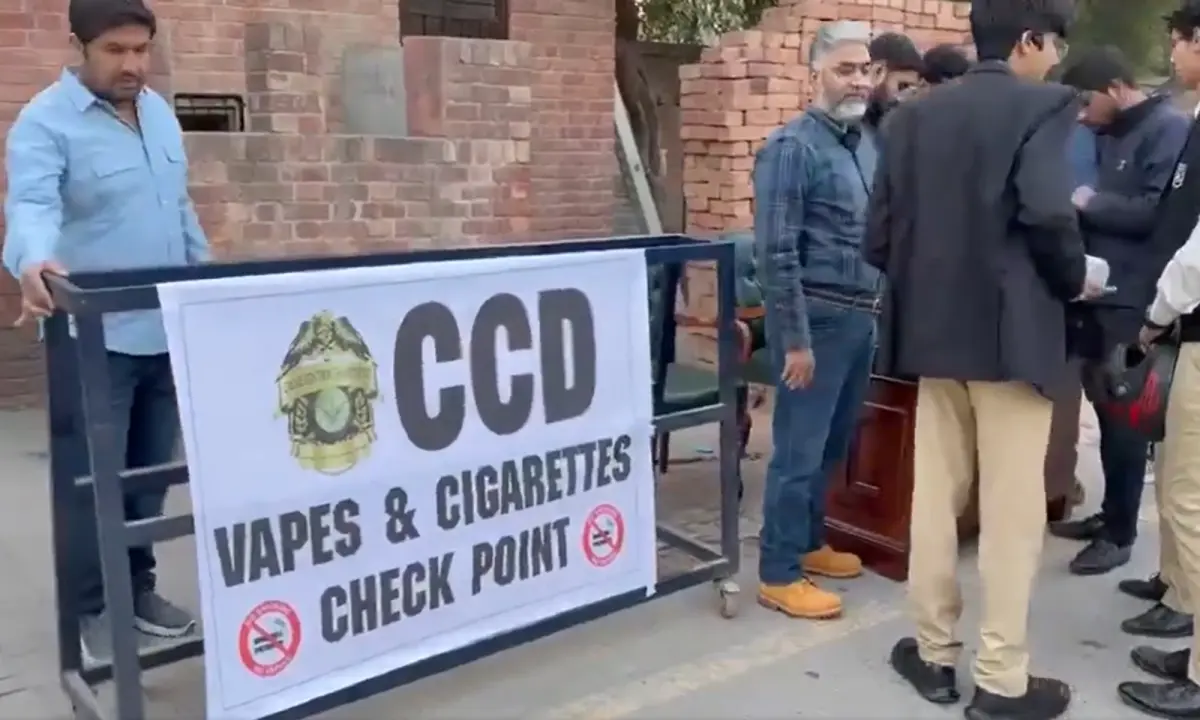
Key context: <p>LAHORE: Punjab’s Crime Control Department (CCD) has started checking students’ school bags outside educational institutions for cigarettes, vapes and other intoxicating substances, drawing criticism from social media users over the involvement of law enforcement personnel in disciplining students.</p> <p>After the CCD set up a checking point outside a college in Lahore on Friday, it issued a press release on Saturday announcing a special campaign across educational institutions in Punjab to protect children from drugs, cigarettes, vapes and other intoxicating substances.</p> <figure class='media w-full sm:w-1/2 media--right media--embed media--uneven' data-original-src='https://www.dawn.com/news/1969181/crime-control-or-state-criminality-policing-power-and-impunity-in-punjab'> <div class='media__item media__item--newskitlink '> <iframe class="nk-iframe" width="100%" frameborder="0" scrolling="no" style="height:250px;position:relative" src="https://www.dawn.com/news/card/1969181" sandbox="allow-same-origin allow-scripts allow-popups allow-modals allow-forms"></iframe></div> </figure> <p>A video of the department’s checkpoint set up on Friday to search students’ bags for any cigarettes and vapes was widely circulated on social media.</p> <p>The move prompted a debate, with some social media users supporting the initiative as a measure to protect young people from drugs, while others questioned its legality, ethics and implications for students’ rights.</p> <p>The CCD, <a href="https://www.dawn.com/news/1894607"><u>established</u></a> last year, has often been criticised by human rights advocates and civil society members for a high number of <a href="https://www.dawn.com/news/2038758">casualties among suspects</a>. The Human Rights Commission of Pakistan (HRCP) has <a href="https://www.dawn.com/news/1973913">accused</a> it of “extrajudicial killings”, which the department <a href="https://www.dawn.com/news/1974715">denies</a>.</p> <p>According to the press release by a CCD spokesperson, special checking desks have been established outside educational institutions, where students’ bags were searched to ensure that no intoxicating substances were taken inside, knowingly or unknowingly.</p> <figure class='media w-1/2 sm:w-3/5 media--center media--embed media--uneven' data-original-src='https://www.facebook.com/photo?fbid=1077220291996239&set=a.121140834270861'> <div class='media__item media__item--facebook3 media__item--relative'><div class="fb-post" data-href="https://www.facebook.com/photo?fbid=1077220291996239&set=a.121140834270861" data-width="auto"></div></div> </figure> <p>Students were also being briefed about the harmful effects of smoking and vaping, the spokesperson said, adding that the campaign aimed to prevent drug use in educational institutions and raise awareness about its physical, psychological, educational and social consequences.</p> <p>He said parents and teachers had a key role in protecting children from substance abuse and urged them to monitor their activities and habits. This was also underscored by CCD on its Facebook page.</p> <figure class='media w-1/2 sm:w-3/5 media--center media--embed media--uneven' data-original-src='https://www.facebook.com/photo?fbid=1076428575408744&set=a.121140834270861'> <div class='media__item media__item--facebook3 media__item--relative'><div class="fb-post" data-href="https://www.facebook.com/photo?fbid=1076428575408744&set=a.121140834270861" data-width="auto"></div></div> </figure> <p>The department also appealed to the public to identify shopkeepers selling cigarettes and vapes to children, warning that cases would be registered against those suspected to be involved and they would be arrested in accordance with the law.</p> <p>The spokesperson insisted that the initiative was part of efforts to encourage healthy lifestyles, maintain a safe educational environment and achieve the goal of a drug-free Punjab.</p> <p>While the CCD asserted that parents welcomed the campaign, some internet users questioned the need to involve the law enforcement department in scrutinising students when teachers and parents could do the same.</p> <p>Criticising the initiative, human rights lawyer Asad Jamal <a rel="nofollow noopener noreferrer" target="_blank" class="link--external" href="https://x.com/LegalPolitical/status/2123764482220626038">said</a> on X that the Punjab government believed that every problem could be addressed through increased securitisation of public life.</p> <p>“Today, it’s bags, tomorrow students will be bodily searched. Unconstitutional, unethical and unacceptable,” he wrote.</p> <figure class='media w-full sm:w-1/2 media--right media--embed media--uneven' data-original-src='https://www.dawn.com/news/1410728/students-drug-use-do-we-know-what-were-talking-about'> <div class='media__item media__item--newskitlink '> <iframe class="nk-iframe" width="100%" frameborder="0" scrolling="no" style="height:250px;position:relative" src="https://www.dawn.com/news/card/1410728" sandbox="allow-same-origin allow-scripts allow-popups allow-modals allow-forms"></iframe></div> </figure> <p>Former Punjab minister Arslan Khalid also questioned the presence of police personnel outside educational institutions, saying schools should not rely on police to discipline children.</p> <p>“Parents and teachers are enough to teach discipline to the children. I will never want my children to have their school bags checked by police,” he <a rel="nofollow noopener noreferrer" target="_blank" class="link--external" href="https://x.com/arslankhalid_m/status/2123744689983750488">posted</a> on X.</p> <p>In a reply to anchorperson Iqrarul Hassan, who voiced his support for the move, Khalid asked, “How is it a reasonable decision to allow police officers who regularly deal with hardened criminals, whose language and behaviour we are all familiar with, and who have no training in dealing with schoolchildren, to search our innocent children every day?</p> <p>“If a child does something wrong, then a teacher or a father knows how to deal with them.”</p> <figure class='media w-full w-full media-- media--embed media--uneven media--tweet' data-original-src='https://x.com/arslankhalid_m/status/2123788061188477331'> <div class='media__item media__item--twitter '><span> <blockquote class="twitter-tweet" lang="en"> <a href="https://twitter.com/arslankhalid_m/status/2123788061188477331"></a> </blockquote> </span></div> </figure> <p>Writer Ammara Ahmed <a rel="nofollow noopener noreferrer" target="_blank" class="link--external" href="https://x.com/ammarawrites/status/2124002340265202138">wrote</a>, “Virtue signalling by Punjab government has no end.”</p> <p>In his <a rel="nofollow noopener noreferrer" target="_blank" class="link--external" href="https://x.com/iqrarulhassan/status/2123769460972785728">post</a>, Hassan linked it to the growing use of ice (crystal methamphetamine) and other drugs in educational institutions.</p> <p>The TV personality said that as a father, he felt reassured by the measure, adding that although such steps would not be desirable under ideal circumstances, they had become necessary in view of the growing drug menace.</p> <p>Television anchor Iqra Haris also <a rel="noopener noreferrer" target="_blank" class="link--external" href="https://x.com/iqra_shehzad/status/2123771230465786081">termed</a> it a “much-needed step”.</p> <p>In June this year, Karachi’s South Zone police <a href="https://www.dawn.com/news/2006166">prepared an anti-drug policy</a> in collaboration with the heads of 22 universities and schools to counter the growing threat of narcotics and vaping products.</p> <p>Under the policy, anti-drug committees were to be formed in educational institutes, comprising heads of institutions, teachers, parents and law enforcers.</p> This development from dawn.com highlights ongoing changes in the sector.
LAHORE: Punjab’s Crime Control Department (CCD) has started checking students’ school bags outside educational institutions for cigarettes, vapes and other intoxicating substances, drawing criticism from social media users over the involvement of law enforcement personnel in disciplining students. After the CCD set up a checking point outside a college in Lahore on Friday, it issued a press release on Saturday announcing a special campaign across educational institutions in Punjab to protect children from drugs, cigarettes, vapes and other intoxicating substances. A video of the department’s checkpoint set up on Friday to search students’ bags for any cigarettes and vapes was widely circulated on social media. The move prompted a debate, with some social media users supporting the initiative as a measure to protect young people from drugs, while others questioned its legality, ethics and implications for students’ rights. The CCD, established last year, has often been criticised by human rights advocates and civil society members for a high number of casualties among suspects. The Human Rights Commission of Pakistan (HRCP) has accused it of “extrajudicial killings”, which the department denies. According to the press release by a CCD spokesperson, special checking desks have been established outside educational institutions, where students’ bags were searched to ensure that no intoxicating substances were taken inside, knowingly or unknowingly. Students were also being briefed about the harmful effects of smoking and vaping, the spokesperson said, adding that the campaign aimed to prevent drug use in educational institutions and raise awareness about its physical, psychological, educational and social consequences. He said parents and teachers had a key role in protecting children from substance abuse and urged them to monitor their activities and habits. This was also underscored by CCD on its Facebook page. The department also appealed to the public to identify shopkeepers selling cigarettes and vapes to children, warning that cases would be registered against those suspected to be involved and they would be arrested in accordance with the law. The spokesperson insisted that the initiative was part of efforts to encourage healthy lifestyles, maintain a safe educational environment and achieve the goal of a drug-free Punjab. While the CCD asserted that parents welcomed the campaign, some internet users questioned the need to involve the law enforcement department in scrutinising students when teachers and parents could do the same. Criticising the initiative, human rights lawyer Asad Jamal said on X that the Punjab government believed that every problem could be addressed through increased securitisation of public life. “Today, it’s bags, tomorrow students will be bodily searched. Unconstitutional, unethical and unacceptable,” he wrote. Former Punjab minister Arslan Khalid also questioned the presence of police personnel outside educational institutions, saying schools should not rely on police to discipline children. “Parents and teachers are enough to teach discipline to the children. I will never want my children to have their school bags checked by police,” he posted on X. In a reply to anchorperson Iqrarul Hassan, who voiced his support for the move, Khalid asked, “How is it a reasonable decision to allow police officers who regularly deal with hardened criminals, whose language and behaviour we are all familiar with, and who have no training in dealing with schoolchildren, to search our innocent children every day? “If a child does something wrong, then a teacher or a father knows how to deal with them.” Writer Ammara Ahmed wrote, “Virtue signalling by Punjab government has no end.” In his post, Hassan linked it to the growing use of ice (crystal methamphetamine) and other drugs in educational institutions. The TV personality said that as a father, he felt reassured by the measure, adding that although such steps would not be desirable under ideal circumstances, they had become necessary in view of the growing drug menace. Television anchor Iqra Haris also termed it a “much-needed step”. In June this year, Karachi’s South Zone police prepared an anti-drug policy in collaboration with the heads of 22 universities and schools to counter the growing threat of narcotics and vaping products. Under the policy, anti-drug committees were to be formed in educational institutes, comprising heads of institutions, teachers, parents and law enforcers.
Curation & Context
This page summarizes a public news report from dawn.com. Global News Hub provides the "Why This Matters" takeaway using editorial insights and AI curation to give readers rapid, high-value context before they click through to read the full article.