In hard-hitting speech, Bilawal says system was ‘made to collapse’ amid debate on governance ‘reset’
Why This Matters
Key context: <p>Amid debate on a “system reset” in the country, PPP Chairman Bilawal Bhutto-Zardari said on Tuesday that the governance system had not collapsed, but was rather “made to collapse”.</p> <p>He made the remarks while speaking at the Karachi Press Club. Over the past few months, Interior Minister Mohsin Naqvi has whipped up a <a href="https://www.dawn.com/news/2019825"><u>political storm</u></a> since he called for the formation of <a href="https://www.dawn.com/news/2019599"><u>new administrative units</u></a> in the country, saying the current “system” of governance had “collapsed” and needed a “reset”.</p> <p>Recalling Naqvi’s remarks, Bilawal said, “Nobody objects that the system has collapsed, but there is no discussion and debate on why it collapsed.”</p> <p>He noted that the proposed solution “was not an actual remedy to the illness due to which we suffered a system collapse”.</p> <p>“If we want to focus on resolving the issues of the public, if we want to fight poverty, unemployment, inflation, then we absolutely need to decide why the system collapsed,” the Bhutto scion said.</p> <p>Bilawal asserted a reset was “definitely needed”; however, he also stressed that it should be political.</p> <p>“Why political? Because politicians are the representatives of the people, and if politicians do not play their role, then these fundamental issues won’t be resolved,” Bilawal said.</p> <p>“I believe the system has not collapsed, but it has been made to collapse,” he stated, while acknowledging his own role in the matter.</p> <p>“Everyone makes mistakes, but there comes a time when you must fix those mistakes. How do we fix that?” Bilawal asked rhetorically.</p> <p>He noted that state institutions had “lost their legitimacy”, calling for it to be restored.</p> <p>Bilawal also came to Maulana Fazlur Rehman’s defence as tensions between the Jamiat Ulema-i-Islam (JUI-F) chief and the government have flared in recent weeks.</p> <p>In his address, Bilawal said that it was the opposition’s role in the Parliament to criticise the government.</p> <p>“It is the opposition’s right to criticise you, and however he (Fazl) does it, it is their right,” Bilawal said.</p> <p>Bilawal remarked that the opposition had the “most patriotic” role in the Parliament. “For any government to question the patriotism of an opposition member [..] it is not only an injustice to that parliament or to the system, but the biggest injustice to the country,” he added.</p> <p>He said the difference of opinion within the Parliament was the “beauty and strength of democracy”.</p> <p>Bilawal reiterated, “If we want to reset the system, a political reset has to happen; it should begin from the parliament”.</p> <p>He noted that the opposition had lost trust in the system.</p> <p>“They have lost confidence in the working of the Parliament, and we all have to regain this trust,” he said.</p> <hr /> <p><em>More to follow.</em></p> This development from dawn.com highlights ongoing changes in the sector.
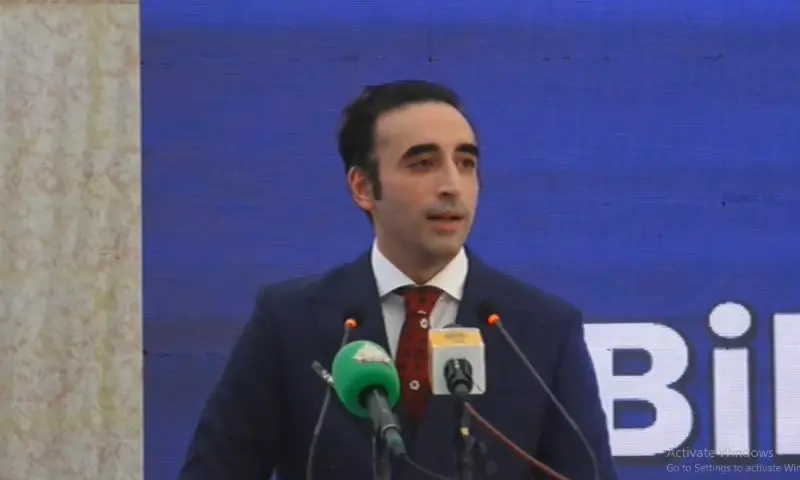
Amid debate on a “system reset” in the country, PPP Chairman Bilawal Bhutto-Zardari said on Tuesday that the governance system had not collapsed, but was rather “made to collapse”. He made the remarks while speaking at the Karachi Press Club. Over the past few months, Interior Minister Mohsin Naqvi has whipped up a political storm since he called for the formation of new administrative units in the country, saying the current “system” of governance had “collapsed” and needed a “reset”. Recalling Naqvi’s remarks, Bilawal said, “Nobody objects that the system has collapsed, but there is no discussion and debate on why it collapsed.” He noted that the proposed solution “was not an actual remedy to the illness due to which we suffered a system collapse”. “If we want to focus on resolving the issues of the public, if we want to fight poverty, unemployment, inflation, then we absolutely need to decide why the system collapsed,” the Bhutto scion said. Bilawal asserted a reset was “definitely needed”; however, he also stressed that it should be political. “Why political? Because politicians are the representatives of the people, and if politicians do not play their role, then these fundamental issues won’t be resolved,” Bilawal said. “I believe the system has not collapsed, but it has been made to collapse,” he stated, while acknowledging his own role in the matter. “Everyone makes mistakes, but there comes a time when you must fix those mistakes. How do we fix that?” Bilawal asked rhetorically. He noted that state institutions had “lost their legitimacy”, calling for it to be restored. Bilawal also came to Maulana Fazlur Rehman’s defence as tensions between the Jamiat Ulema-i-Islam (JUI-F) chief and the government have flared in recent weeks. In his address, Bilawal said that it was the opposition’s role in the Parliament to criticise the government. “It is the opposition’s right to criticise you, and however he (Fazl) does it, it is their right,” Bilawal said. Bilawal remarked that the opposition had the “most patriotic” role in the Parliament. “For any government to question the patriotism of an opposition member [..] it is not only an injustice to that parliament or to the system, but the biggest injustice to the country,” he added. He said the difference of opinion within the Parliament was the “beauty and strength of democracy”. Bilawal reiterated, “If we want to reset the system, a political reset has to happen; it should begin from the parliament”. He noted that the opposition had lost trust in the system. “They have lost confidence in the working of the Parliament, and we all have to regain this trust,” he said. More to follow.
Curation & Context
This page summarizes a public news report from dawn.com. Global News Hub provides the "Why This Matters" takeaway using editorial insights and AI curation to give readers rapid, high-value context before they click through to read the full article.