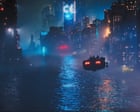
Blade Runner 2099 review – every scene of this TV version is packed with terrifying visual beauty
Why This Matters
Key context: <p>In this adaptation of the sci-fi franchise Michelle Yeoh and Hunter Schafer are on a quest to track down a group of replicants gone rogue. It’s a neon-filled world of beautiful doomsday visions</p><p>Memory: the mother of the muses, and the heart of the Blade Runner franchise. Science fiction is forever asking what it means to be human and, in the future dystopia first painted by Ridley Scott’s 1982 movie, the answer is that we are what we remember: we are the experiences we preserve as a collection of short films inside our heads. In the original Blade Runner, Rachael (Sean Young) is devastated to learn that her childhood memories aren’t real, and she is therefore a robot “replicant”; in Denis Villeneuve’s sequel, Blade Runner 2049, K (Ryan Gosling) knows he’s a replicant but hopes his memories are a sign that he is something close to human.</p><p>Blade Runner has always been relevant to the age of AI, in that its starting point is that enslaved robots have rebelled. But the new version, the story’s first expansion into television, is acutely topical in an era where we’re increasingly anxious about whether what we’re seeing – or reading – is the work of machines. Fifty years on from the events of the last movie, the replicants have won: “Blade runners” are now replicants hunting down disobedient humans rather than the other way around, and the capture and storage of human memories is illegal. As humanity dies, what it remembers has become valuable contraband.</p> <a href="https://www.theguardian.com/tv-and-radio/2026/nov/25/blade-runner-2099-review-tv-version-terrifying-visual-beauty">Continue reading...</a> This development from The Guardian highlights ongoing changes in the sector.
In this adaptation of the sci-fi franchise Michelle Yeoh and Hunter Schafer are on a quest to track down a group of replicants gone rogue. It’s a neon-filled world of beautiful doomsday visionsMemory: the mother of the muses, and the heart of the Blade Runner franchise. Science fiction is forever asking what it means to be human and, in the future dystopia first painted by Ridley Scott’s 1982 movie, the answer is that we are what we remember: we are the experiences we preserve as a collection of short films inside our heads. In the original Blade Runner, Rachael (Sean Young) is devastated to learn that her childhood memories aren’t real, and she is therefore a robot “replicant”; in Denis Villeneuve’s sequel, Blade Runner 2049, K (Ryan Gosling) knows he’s a replicant but hopes his memories are a sign that he is something close to human.Blade Runner has always been relevant to the age of AI, in that its starting point is that enslaved robots have rebelled. But the new version, the story’s first expansion into television, is acutely topical in an era where we’re increasingly anxious about whether what we’re seeing – or reading – is the work of machines. Fifty years on from the events of the last movie, the replicants have won: “Blade runners” are now replicants hunting down disobedient humans rather than the other way around, and the capture and storage of human memories is illegal. As humanity dies, what it remembers has become valuable contraband. Continue reading...
Curation & Context
This page summarizes a public news report from The Guardian. Global News Hub provides the "Why This Matters" takeaway using editorial insights and AI curation to give readers rapid, high-value context before they click through to read the full article.