Crew from Nasa's simulated Mars mission emerges after 378 days in isolation
Why This Matters
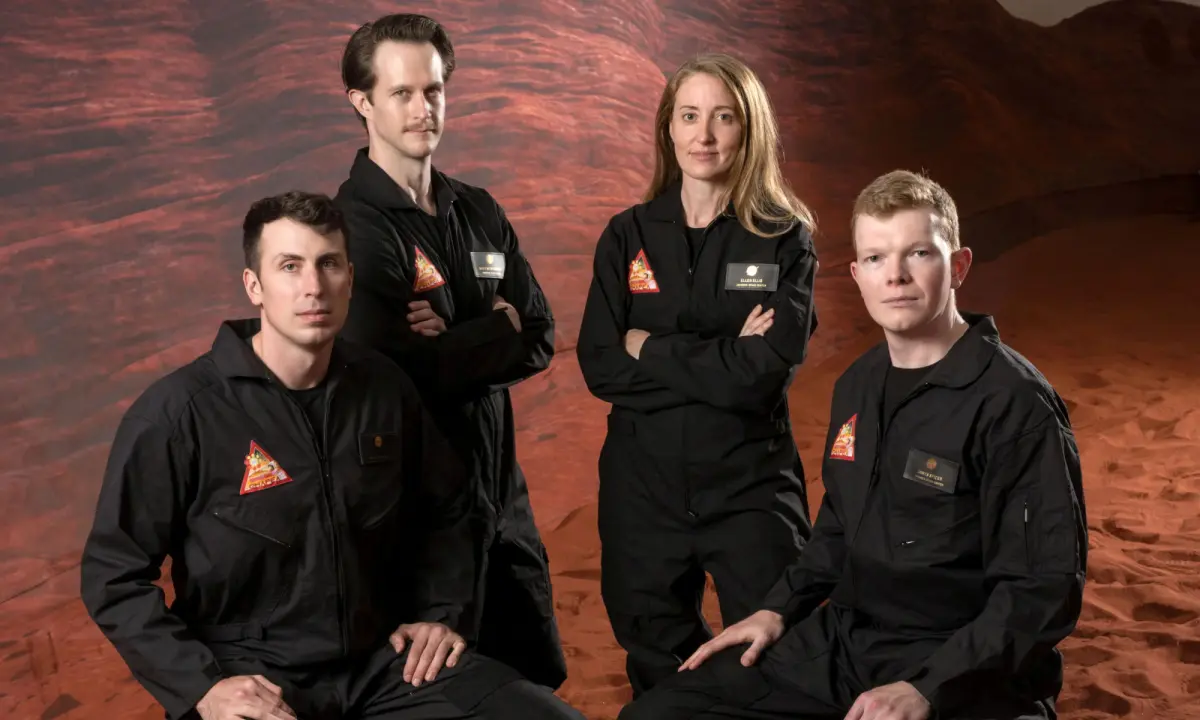
Key context: <p>The four members of a crew who took part in a simulated mission to Mars have emerged after 378 days in isolation at the US space agency’s Johnson Space Centre in Houston, an endeavour designed to help prepare for a possible future excursion by Nasa astronauts to Earth’s planetary neighbour.</p> <p>“It’s been a hell of a year — analogue astronauts living in captivity of our own free will,” Ellen Ellis, the medical officer on the Crew Health and Performance Exploration Analogue, or Chapea, mission, said in remarks at Johnson Space Centre after emerging with her three crewmates on Saturday.</p> <p>The four entered the 158-square-metre 3D-printed habitat on Oct 19, 2025, and performed tasks such as growing crops in simulated Martian soil and interfacing with Nasa officials with delays recreating those inherent in interplanetary communications.</p> <figure class='media w-full w-full media-- media--embed ' data-original-src='https://www.youtube.com/live/2MONMgAmXNU'> <div class='media__item media__item--youtube '><iframe src='https://www.youtube.com/embed/2MONMgAmXNU?enablejsapi=1&controls=1&modestbranding=1&rel=0' loading='lazy' allow='accelerometer; autoplay; clipboard-write; encrypted-media; gyroscope; picture-in-picture' allowfullscreen='' frameborder='0' scrolling='no' width='100%' height='100%'></iframe></div> </figure> <p>Nasa, which has explored Mars with <a href="https://www.dawn.com/news/2036875">robotic rovers</a> and orbiting <a href="https://www.dawn.com/news/1133577">spacecraft</a>, has ambitions for a human mission to Mars as early as the 2030s, with plans before that to <a href="https://www.dawn.com/news/1989403">return astronauts to the moon</a> for the first time since 1972.</p> <p>“We have a narrowing window of opportunity to maintain US preeminence in space,” Ellis said.</p> <p>Ellis mentioned the service academy for space-related operations pursued by United States President Donald Trump’s administration and <a href="https://www.dawn.com/news/1990178">plans</a> for a lunar base.</p> <p>“Let’s seize the initiative, lead with science that will benefit our economy and ensure our legacy in space for our children’s children,” Ellis said.</p> <p>The other crew members were mission commander Ross Elder, science officer Matthew Montgomery and flight engineer James Spicer.</p> <figure class='media w-full sm:w-1/2 media--right media--embed media--uneven' data-original-src='https://www.dawn.com/news/1921754'> <div class='media__item media__item--newskitlink '> <iframe class="nk-iframe" width="100%" frameborder="0" scrolling="no" style="height:250px;position:relative" src="https://www.dawn.com/news/card/1921754" sandbox="allow-same-origin allow-scripts allow-popups allow-modals allow-forms"></iframe></div> </figure> <p>“For Mars, the risks are great,” Elder said in remarks after emerging from isolation.</p> <p>“But through seeking understanding, strong vision and leadership, creativity, fortitude, hard work and incredible foundation, the goal of putting humans on Mars is not only achievable, but rather inevitable.”</p> <p>The crew is set to participate in two weeks of post-mission evaluations and debriefing with Nasa scientists. Nasa has said it is looking for insight into what it takes for astronauts to adapt to the routines and demands of daily life on long-duration missions beyond Earth to keep them healthy, productive, and connected.</p> <p>This was Nasa’s second Chapea mission, with another <a href="https://www.dawn.com/news/1849294">four-person crew</a> in isolation at Johnson Space Centre for 378 days spanning 2023 and 2024.</p> <figure class='media w-full sm:w-1/2 media--right media--embed media--uneven' data-original-src='https://www.dawn.com/news/1849294'> <div class='media__item media__item--newskitlink '> <iframe class="nk-iframe" width="100%" frameborder="0" scrolling="no" style="height:250px;position:relative" src="https://www.dawn.com/news/card/1849294" sandbox="allow-same-origin allow-scripts allow-popups allow-modals allow-forms"></iframe></div> </figure> <p>Vanessa Wyche, director of the Johnson Space Centre, greeted the crew members when they exited isolation. Wyche said they managed to live with limited resources, maintain their habitat, and carry out simulated Mars operations.</p> <p>Wyche also noted how the crew dealt with the simulated interplanetary communications, with lag times between sending messages and receiving responses.</p> <p>“These delays require patience, careful planning and greater independence — qualities that will be essential for future astronauts travelling millions of miles from home,” Wyche said.</p> <p>Wyche said the lessons learned from the Chapea crew and their experiences will help pave the way for the missions first to the moon and “one day, Mars”.</p> This development from dawn.com highlights ongoing changes in the sector.
The four members of a crew who took part in a simulated mission to Mars have emerged after 378 days in isolation at the US space agency’s Johnson Space Centre in Houston, an endeavour designed to help prepare for a possible future excursion by Nasa astronauts to Earth’s planetary neighbour. “It’s been a hell of a year — analogue astronauts living in captivity of our own free will,” Ellen Ellis, the medical officer on the Crew Health and Performance Exploration Analogue, or Chapea, mission, said in remarks at Johnson Space Centre after emerging with her three crewmates on Saturday. The four entered the 158-square-metre 3D-printed habitat on Oct 19, 2025, and performed tasks such as growing crops in simulated Martian soil and interfacing with Nasa officials with delays recreating those inherent in interplanetary communications. Nasa, which has explored Mars with robotic rovers and orbiting spacecraft, has ambitions for a human mission to Mars as early as the 2030s, with plans before that to return astronauts to the moon for the first time since 1972. “We have a narrowing window of opportunity to maintain US preeminence in space,” Ellis said. Ellis mentioned the service academy for space-related operations pursued by United States President Donald Trump’s administration and plans for a lunar base. “Let’s seize the initiative, lead with science that will benefit our economy and ensure our legacy in space for our children’s children,” Ellis said. The other crew members were mission commander Ross Elder, science officer Matthew Montgomery and flight engineer James Spicer. “For Mars, the risks are great,” Elder said in remarks after emerging from isolation. “But through seeking understanding, strong vision and leadership, creativity, fortitude, hard work and incredible foundation, the goal of putting humans on Mars is not only achievable, but rather inevitable.” The crew is set to participate in two weeks of post-mission evaluations and debriefing with Nasa scientists. Nasa has said it is looking for insight into what it takes for astronauts to adapt to the routines and demands of daily life on long-duration missions beyond Earth to keep them healthy, productive, and connected. This was Nasa’s second Chapea mission, with another four-person crew in isolation at Johnson Space Centre for 378 days spanning 2023 and 2024. Vanessa Wyche, director of the Johnson Space Centre, greeted the crew members when they exited isolation. Wyche said they managed to live with limited resources, maintain their habitat, and carry out simulated Mars operations. Wyche also noted how the crew dealt with the simulated interplanetary communications, with lag times between sending messages and receiving responses. “These delays require patience, careful planning and greater independence — qualities that will be essential for future astronauts travelling millions of miles from home,” Wyche said. Wyche said the lessons learned from the Chapea crew and their experiences will help pave the way for the missions first to the moon and “one day, Mars”.
Curation & Context
This page summarizes a public news report from dawn.com. Global News Hub provides the "Why This Matters" takeaway using editorial insights and AI curation to give readers rapid, high-value context before they click through to read the full article.