Authorities going ‘extra mile’ in the absence of flood data
Why This Matters
The suspension of the Indus Waters Treaty by India has created a critical information gap for Pakistan, forcing authorities to rely on less credible sources and take extra precautionary measures to prepare for potential flooding. This development highlights the challenges posed by the treaty's suspension, which has significant implications for regional water management and cooperation. The situation underscores the need for a swift resolution to the treaty's status to ensure effective flood preparedness and mitigation efforts.
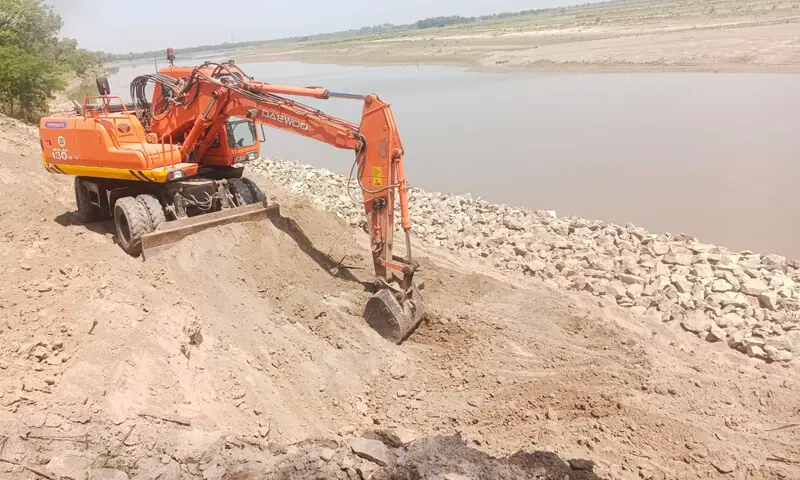
• Officials having to rely on ‘less credible sources’ in the absence of river flow information from India• Action to clear Ravi riverbed of ‘temporary encroachments’ on the cards LAHORE: The Punjab government has asked the irrigation department to prepare for flooding under the ‘high-alert category’, amid prevailing uncertainty about river flows due to India’s unilateral suspension of the Indus Waters Treaty. A source privy to a meeting chaired by Lahore Commissioner Nauman Yousaf told Dawn that the irrigation department was making arrangements keeping in view the information being shared on social media or through other means, which were insufficient to make accurate assessments. “In a recent meeting related to the flood situation and arrangements, a senior official of the irrigation department revealed that India continued to avoid sharing data since it had put the Indus Waters Treaty in abeyance in April last year,” the source said. In light of this information, the commissioner directed the irrigation department to take extra precautionary measures. “If they (India) are not giving information (related to river flows, flood situation etc), then we must be very vigilant. So if the flood situation is normal, you must make arrangements required for medium floods and if the situation is medium, then go for arrangements that are required under the high-flood category,” the official quoted the commissioner as directing the irrigation officers. “The commissioner also asked the respective deputy commissioners to finalise flood-related arrangements as soon as possible to deal with any untoward situation,” he added. The official said the Lahore and Sheikhupura deputy commissioners, on this occasion, briefed the commissioner about the ongoing flood arrangements, stating that all critical points along the Ravi had been marked and an operation to clear the riverbed of temporary encroachments would be launched soon. Talking to Dawn, a senior irrigation official confirmed the instructions from the commissioner. “Yes, the commissioner has directed us to do so.” The official also reiterated that India’s reluctance to share the information with Pakistan about river flows was a hurdle in their preparations, but hoped that they would be fully prepared ahead of the flooding season. To a question, he said the water flow in the Ravi and all other rivers was normal these days, rejecting the reports being shared on social media, especially those that were related to an increase in water level in the Ravi. “All rivers including Sindh, Kabul, Jhelum, Chenab, Ravi and Sutlej are experiencing a normal flow. So the situation is not problematic at all,” he maintained, requesting the public at large to not worry in this regard. Districts asked to remain vigilant Meanwhile, the Punjab government directed all district administrations, especially those where last year’s floods played havoc, to remain vigilant and make necessary flood arrangements in collaboration with other departments. “The DCs, (and) commissioners have been asked to monitor the flood situation on a daily basis in coordination with the irrigation department,” a senior official said. He said that the district administrations of Lahore and Sheikhupura must launch a crackdown on sand excavation from prohibited sites, adding that sand mining near strategic bridges and bay areas could damage critical infrastructure. The commissioner also directed the irrigation, highways, and railways officials to completely clear the bays of bridges over the Ravi River. He emphasised that protecting human lives, property, and infrastructure from floods was a collective and equal responsibility for everyone. In August last year, a massive flood in the Ravi River (220,000 cusecs) entered Lahore’s various residential localities, inundating roads and damaging houses and other infrastructure. The localities, which suffered due to floods, included Shafiqabad, Farrakhabad and Tallat Park near Shahdara bridge and Theme Park, near Chuhng (Multan Road) and Park View near Thokar Niaz Baig. Last year’s floods affected at least 31 villages along the river, including Mohlanwal and Chuhng. A total of 82,952 people were affected by the floods in Lahore alone. Lahore had also witnessed the worst-ever floods in 1988 after the Ravi received a 345,000 cusecs flow - around 100,000 cusecs more than the designed capacity - leading to massive destruction in Shahdara and adjoining localities. Published in Dawn, July 17th, 2026
Curation & Context
This page summarizes a public news report from dawn.com. Global News Hub provides the "Why This Matters" takeaway using editorial insights and AI curation to give readers rapid, high-value context before they click through to read the full article.